
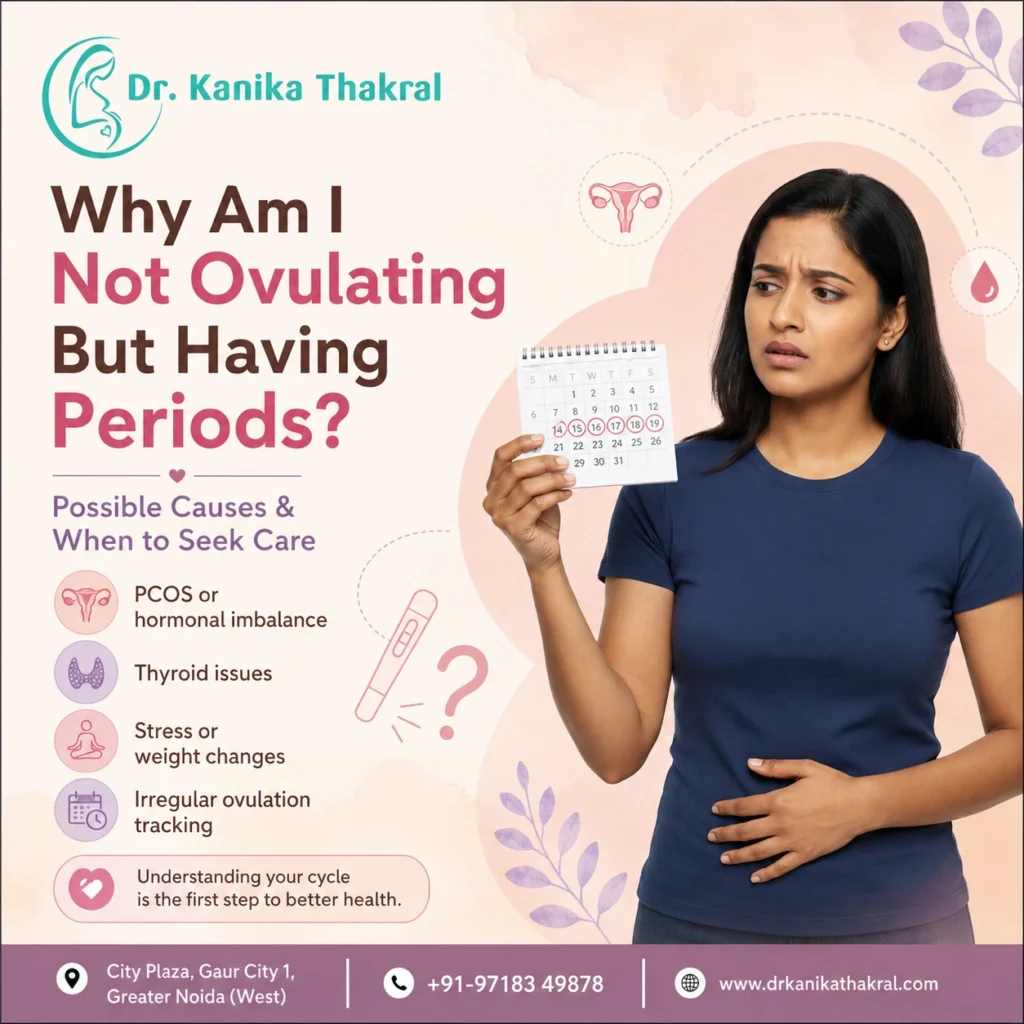
Why Am I Not Ovulating But Having Periods?
Not Ovulating but still having periods can feel confusing. Many women think that bleeding every month always means ovulation is happening. However, that is not always true.
Sometimes, a woman may bleed without releasing an egg. This is called an anovulatory cycle. The bleeding may look like a period, but the ovary may not have released an egg in that cycle.
This can affect fertility because pregnancy usually needs ovulation. Dr. Kanika Thakral provides guidance for Irregular periods treatment, Hormonal imbalance treatment, PCOS treatment, and Infertility Treatment in Gaur City.
What Does Ovulation Mean?
Ovulation means the ovary releases an egg. This usually happens once in a menstrual cycle. If sperm meets the egg, pregnancy may happen.
If ovulation does not happen, there is no egg available for fertilization. As a result, getting pregnant naturally may become difficult.
Ovulation is controlled by hormones. Therefore, any hormonal disturbance can affect egg release.
Can You Have Periods Without Ovulation?
Yes, bleeding can happen even when ovulation does not happen. This is often called anovulatory bleeding. It may look like a normal period, but the hormonal pattern is different.
In a regular ovulatory cycle, hormones rise and fall in a balanced way. After ovulation, progesterone helps prepare and stabilize the uterine lining.
If ovulation does not happen, progesterone may not rise properly. Because of this, the uterine lining may shed irregularly. This can cause bleeding that looks like a period.
Why This Can Be Confusing
A woman may feel that everything is normal because she gets monthly bleeding. However, bleeding alone does not confirm ovulation.
Some women have regular-looking periods but still ovulate late or irregularly. Others may have long gaps, spotting, heavy bleeding, or unpredictable cycles.
So, if you are trying to conceive and pregnancy is not happening, ovulation tracking becomes important.
Signs You May Not Be Ovulating
Not every woman can easily identify ovulation. Still, some signs may suggest irregular or absent ovulation.
Possible signs include:
- Irregular periods
- Period gaps longer than usual
- Very light or very heavy bleeding
- Spotting between periods
- No clear fertile cervical mucus
- Negative ovulation predictor kits
- No mid-cycle symptoms
- Difficulty getting pregnant
- PCOS symptoms
- Acne or unwanted hair growth
- Weight gain
- Mood changes
These signs do not confirm the problem by themselves. However, they suggest that evaluation may be needed.
Common Causes of Not Ovulating
There are many possible reasons for not ovulating. Some are temporary, while others need treatment.
Common causes include:
- PCOS
- Thyroid imbalance
- High prolactin
- Stress
- Sudden weight gain
- Sudden weight loss
- Excessive exercise
- Poor sleep
- Perimenopause
- Low ovarian reserve
- Hormonal imbalance
- Certain medicines
- Chronic illness
- Eating disorders
The right treatment depends on the cause. Therefore, testing and proper evaluation are important.
PCOS and Not Ovulating
PCOS is one of the common causes of irregular ovulation. In PCOS, hormones may become imbalanced. Because of this, the ovary may not release an egg regularly.
A woman with PCOS may have irregular periods, acne, facial hair growth, weight gain, or difficulty conceiving. However, symptoms can vary. Some women have PCOS even without all classic signs.
PCOS treatment depends on symptoms and pregnancy goals. If pregnancy is planned, the focus may be on restoring ovulation and improving fertility.
Hormonal Imbalance and Ovulation
Hormonal imbalance treatment may be needed when hormones are affecting ovulation. Ovulation depends on a balanced connection between the brain, ovaries, thyroid, and other hormone systems.
Hormones that may affect ovulation include:
- Thyroid hormones
- Prolactin
- Insulin
- Estrogen
- Progesterone
- LH
- FSH
- Androgens
If any of these are disturbed, ovulation may become irregular. That is why hormone testing may be advised in selected cases.
Irregular Periods and Ovulation
Irregular periods often mean ovulation is not happening regularly. However, some women may still ovulate sometimes.
A cycle that is too long, too short, unpredictable, or very heavy may need evaluation. This is especially important if you are planning pregnancy.
Dr. Kanika Thakral provides Irregular periods treatment based on the cause. The treatment plan may be different for PCOS, thyroid imbalance, stress-related cycle changes, fibroids, or perimenopause.
Normal Periods But No Ovulation
Some women may have regular bleeding but still not ovulate every cycle. This can happen due to subtle hormonal imbalance, luteal phase problems, stress, early perimenopause, or PCOS-related ovulation delay.
This is why cycle tracking alone may not be enough. If pregnancy is not happening, your doctor may suggest ovulation confirmation.
Ovulation can be checked with ultrasound tracking, blood tests, or ovulation predictor kits depending on your case.
How to Know If You Are Ovulating
There are several ways to check ovulation. Some can be done at home, while others need medical guidance.
Common methods include:
- Period tracking
- Cervical mucus tracking
- Basal body temperature charting
- Ovulation predictor kits
- Follicular monitoring ultrasound
- Mid-luteal progesterone blood test
- Hormone testing
- Fertility evaluation
Follicular monitoring is often useful when pregnancy is planned. It helps track egg growth and ovulation timing.
When Should You Check Ovulation?
You should consider checking ovulation if you are trying to conceive and pregnancy is not happening. You should also check if your periods are irregular or if PCOS is suspected.
Evaluation is useful if:
- You have irregular periods
- You have PCOS symptoms
- You are trying for pregnancy
- You have no positive ovulation tests
- You have repeated early pregnancy loss
- Your cycles are longer than 35 days
- You miss periods often
- You have thyroid or hormone concerns
- You are above 35 and trying to conceive
Early evaluation can save time and reduce stress.
Not Ovulating and Infertility
Ovulation is important for natural pregnancy. If ovulation is irregular or absent, pregnancy chances may reduce.
However, infertility can have more than one cause. Along with ovulation, the tubes, uterus, sperm health, age, hormones, and general health also matter.
So, Infertility Treatment in Gaur City should include a complete evaluation, not only ovulation tracking.
Fertility Tests That May Be Advised
If you are not ovulating or trying to conceive, Dr. Kanika Thakral may suggest tests based on your history.
Possible tests include:
- Pregnancy test if periods are delayed
- Thyroid profile
- Prolactin test
- AMH test
- LH and FSH in selected cases
- Blood sugar and insulin-related tests
- Pelvic ultrasound
- Follicular monitoring
- Progesterone test after ovulation
- Semen analysis for partner
- Tube testing in selected cases
Not every woman needs every test. A personalized plan is better than random testing.
Treatment for Not Ovulating
Treatment depends on the cause and whether pregnancy is planned. The goal may be to regulate cycles, restore ovulation, manage symptoms, or improve fertility.
Treatment may include:
- Lifestyle correction
- Weight management if needed
- PCOS care
- Thyroid treatment if abnormal
- Prolactin treatment if high
- Ovulation induction medicines
- Follicular monitoring
- Fertility treatment planning
- Cycle regulation medicines
- Nutrition and exercise guidance
Do not start fertility medicines without supervision. They should be used only with proper monitoring.
Lifestyle Tips to Support Ovulation
Lifestyle cannot solve every ovulation problem, but it can support hormone balance.
Helpful tips include:
- Maintain a healthy weight.
- Eat balanced meals.
- Add regular physical activity.
- Improve sleep.
- Reduce excess sugar.
- Manage stress.
- Avoid smoking.
- Limit alcohol.
- Track your cycle.
- Treat thyroid or sugar problems.
- Avoid random hormone medicines.
Small changes can improve cycle health in many women, especially when PCOS or weight-related hormone imbalance is present.
PCOS Treatment and Fertility
PCOS treatment can improve ovulation in many women. The plan depends on symptoms, age, weight, insulin resistance, period pattern, and pregnancy goals.
If pregnancy is not planned, treatment may focus on cycle control, acne, hair growth, and long-term metabolic health.
If pregnancy is planned, treatment may focus on ovulation induction, follicular monitoring, and fertility timing.
Dr. Kanika Thakral can guide the correct plan according to your reports.
Hormonal Imbalance Treatment
Hormonal imbalance treatment should not be based only on symptoms. Blood tests, ultrasound, cycle history, and medical background help identify the cause.
For example, thyroid imbalance needs different treatment than PCOS. High prolactin needs a different approach. Perimenopause-related irregularity needs another plan.
So, correct diagnosis matters before starting medicines.
Can You Get Pregnant If You Are Not Ovulating?
Pregnancy is difficult without ovulation because there is no egg to fertilize. However, if you ovulate sometimes, pregnancy may still happen, but timing becomes unpredictable.
The good news is that many ovulation problems are treatable. Once the cause is identified, treatment can improve ovulation chances in many women.
If you are trying to conceive, do not wait too long without evaluation.
When to See a Gynecologist
You should consult if your periods are irregular, pregnancy is not happening, or you suspect you are not ovulating.
Consult Dr. Kanika Thakral if you have:
- Irregular periods
- Missed periods
- Very heavy bleeding
- Difficulty conceiving
- PCOS symptoms
- Acne or facial hair growth
- Sudden weight gain
- Repeated negative ovulation tests
- Thyroid concern
- History of miscarriage
- Age above 35 and trying to conceive
Timely guidance can help find the cause and plan treatment.
Normal Delivery After Fertility Treatment
Many women worry that fertility treatment means they cannot have Normal Delivery later. This is not true.
If pregnancy happens after ovulation treatment or infertility treatment, delivery planning depends on pregnancy progress, baby position, placenta, mother’s health, and labor condition.
Fertility treatment itself does not automatically decide delivery type. The focus should be safe pregnancy and healthy delivery planning.
Why Choose Dr. Kanika Thakral?
Dr. Kanika Thakral provides caring guidance for ovulation problems, Irregular periods treatment, Hormonal imbalance treatment, PCOS treatment, and fertility concerns.
Women can consult Dr. Kanika Thakral for Infertility Treatment in Gaur City, cycle tracking, ovulation monitoring, pregnancy planning, and reproductive health support.
If you are looking for a Gynecologist in Gaur City or Best Gynecologist in Gaur City, Dr. Kanika Thakral can guide you with privacy, comfort, and clear communication.
Final Thoughts
Not Ovulating but having periods can happen due to anovulatory cycles, PCOS, thyroid imbalance, stress, weight changes, high prolactin, or other hormone-related concerns.
Bleeding every month does not always confirm ovulation. If pregnancy is not happening, or if cycles are irregular, ovulation should be checked properly.
For Irregular periods treatment, Hormonal imbalance treatment, PCOS treatment, Infertility Treatment in Gaur City, and ovulation guidance, consult Dr. Kanika Thakral.
FAQs
1. Can I have periods without ovulating?
Yes, bleeding can happen even when ovulation does not occur. This is called anovulatory bleeding.
2. How do I know if I am not ovulating?
Signs may include irregular periods, long cycles, negative ovulation tests, PCOS symptoms, or difficulty getting pregnant.
3. Does regular bleeding always mean ovulation?
No. Regular-looking bleeding does not always confirm ovulation. Ovulation may need tracking or testing.
4. What causes no ovulation?
Common causes include PCOS, thyroid imbalance, high prolactin, stress, weight changes, perimenopause, and hormonal imbalance.
5. Can PCOS cause no ovulation?
Yes. PCOS can cause irregular ovulation or no ovulation, which may make pregnancy difficult.
