Best Ovarian Cyst Treatment in Gaur City
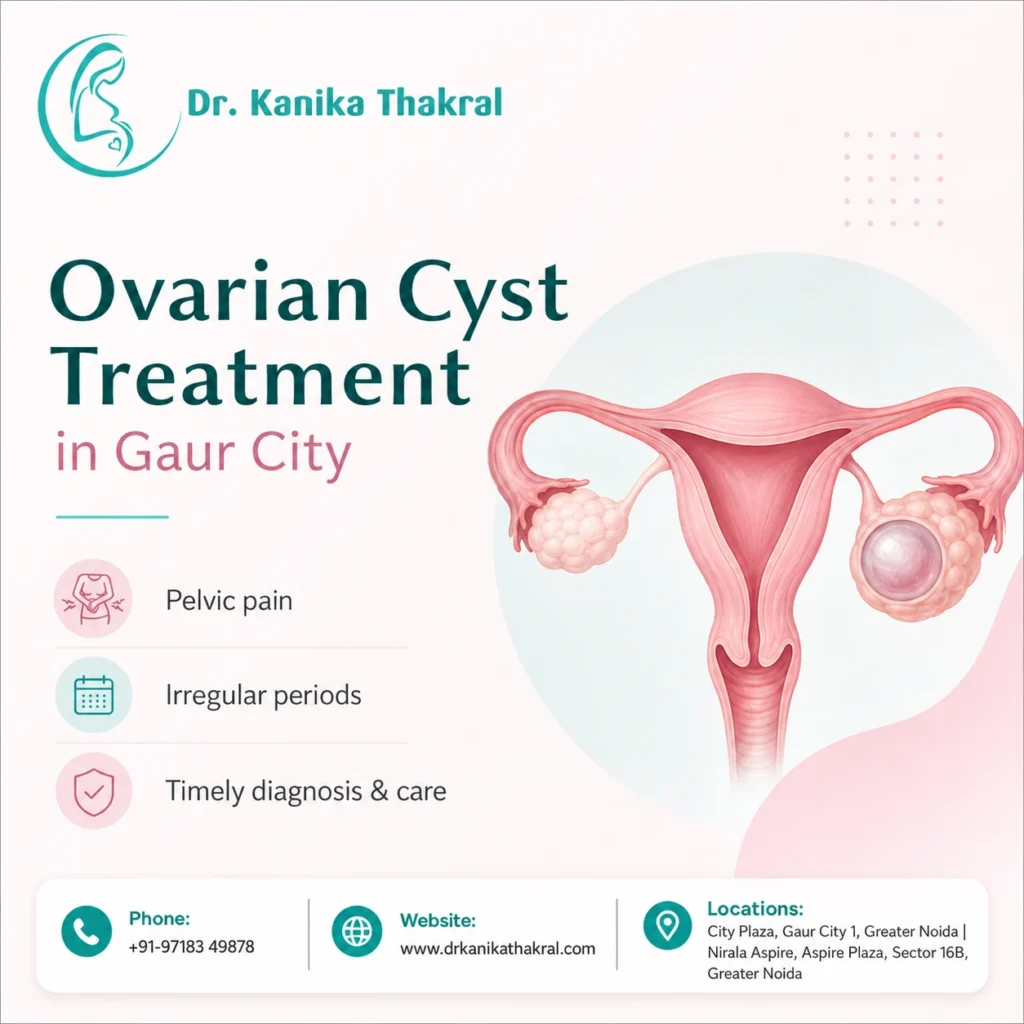
Ovarian Cyst Treatment in Gaur City is important for women who have pelvic pain, lower abdominal pain, irregular periods, bloating, or discomfort around the ovary area. An ovarian cyst is a fluid-filled sac that forms in or on an ovary. Many ovarian cysts are harmless and may go away on their own, but some cysts can cause pain or need treatment.
Some women do not feel any symptoms. However, others may notice pain, cycle changes, heaviness, or sudden discomfort. Therefore, timely evaluation helps find the cyst type and guide the right care.
If you have repeated Pelvic pain in women, Lower abdominal pain in women, or irregular cycles, consult a Gynecologist in Gaur City for proper diagnosis and treatment.
What Is an Ovarian Cyst?
An ovarian cyst is a sac filled with fluid or tissue. It can form inside or on the surface of the ovary. Ovaries are part of the female reproductive system and help release eggs during the monthly cycle.
Many cysts form as part of the normal menstrual cycle. These are often called functional cysts. Usually, they settle without major treatment within a few months. Still, larger cysts or painful cysts need proper follow-up.
Ovarian Cyst Treatment in Gaur City depends on the cyst size, type, symptoms, age, and pregnancy plans.
Common Ovarian Cyst Symptoms
Ovarian cyst symptoms may be mild, strong, or absent. Many women only come to know about a cyst during ultrasound.
Common symptoms may include:
- Pelvic pain
- One-sided lower abdominal pain
- Bloating or heaviness
- Pain before or during periods
- Pain during intercourse
- Irregular periods
- Frequent urination
- Feeling full quickly
- Lower back discomfort
- Sudden sharp pain in some cases
If pain is sudden, severe, or comes with vomiting, dizziness, or fever, seek urgent care. A cyst can sometimes rupture or cause ovarian torsion, which needs quick medical attention.
Common Ovarian Cyst Causes
Ovarian cyst causes can vary from woman to woman. Some cysts happen due to normal ovulation. Others may be linked with hormonal problems or medical conditions.
Common causes include:
- Normal ovulation-related cysts
- Hormonal imbalance
- PCOS-related cysts
- Endometriosis
- Pregnancy-related cysts
- Pelvic infection
- Previous ovarian cyst history
- Fertility medicine in some cases
Because cysts have different causes, diagnosis is important before treatment.
Pelvic Pain in Women and Ovarian Cysts
Pelvic pain in women can happen due to ovarian cysts, but cysts are not the only cause. Pain may also happen due to fibroids, infection, endometriosis, urinary problems, bowel issues, or period-related concerns.
Ovarian cyst pain may feel dull, sharp, heavy, or one-sided. Sometimes, it becomes worse during periods or physical activity.
A proper Pelvic Pain Evaluation helps find whether the pain is due to an ovarian cyst or another reason. This step prevents wrong treatment and repeated painkiller use.
Lower Abdominal Pain in Women: When to Worry
Lower abdominal pain in women should not be ignored if it is repeated, strong, or one-sided. Cyst-related pain may come and go. However, sudden severe pain may need urgent evaluation.
Consult early if you have:
- Sudden sharp lower abdominal pain
- Pain with vomiting
- Pain with fever
- Pain with dizziness
- Severe one-sided pelvic pain
- Heavy bleeding
- Pain during intercourse
- Pain with irregular periods
- Known ovarian cyst with sudden pain
Early care can help prevent complications and guide safe treatment.
Ovarian Cyst and Irregular Periods Treatment
Some ovarian cysts may affect periods. You may notice delayed periods, heavy bleeding, spotting, or irregular cycles.
However, irregular periods can also happen due to PCOS, thyroid issues, high prolactin, stress, weight changes, or hormonal imbalance. Therefore, Irregular periods treatment should focus on the real cause.
Your doctor may check your cycle history, ultrasound report, hormone levels, and symptoms before planning treatment.
Types of Ovarian Cysts
Ovarian cysts can be of different types. The type helps decide whether the cyst needs only monitoring or active treatment.
Common types include:
1. Functional cysts
These cysts form during the monthly cycle. Many functional cysts settle on their own.
2. Dermoid cysts
These cysts may contain tissue such as hair or skin-like material. They may need treatment if large or painful.
3. Endometriotic cysts
These cysts may happen due to endometriosis. They can cause period pain, pelvic pain, and fertility concerns.
4. Cystadenomas
These cysts grow from ovarian tissue and may become large. They need proper evaluation.
5. PCOS-related multiple follicles
In PCOS, ovaries may show many small follicles. This can be linked with irregular periods and ovulation problems.
How Doctors Diagnose Ovarian Cysts
Diagnosis starts with symptoms, period history, and physical evaluation. Your doctor may ask about pain timing, cycle pattern, bleeding, pregnancy plans, and previous cyst history.
Tests may include:
- Pelvic examination
- Pelvic ultrasound
- Transvaginal ultrasound if needed
- Pregnancy test if needed
- Hormone tests
- Blood tests in selected cases
- Follow-up ultrasound
- CA-125 test in selected cases
Ultrasound helps check the cyst size, type, and appearance. Treatment depends on factors such as age, symptoms, cyst type, cyst size, and ultrasound findings.
Ovarian Cyst Treatment in Gaur City
Ovarian Cyst Treatment in Gaur City depends on the cyst report and symptoms. One treatment does not fit every woman.
Common care options may include:
- Watchful waiting for small simple cysts
- Repeat ultrasound
- Pain relief as advised
- Hormone-related care if needed
- PCOS care if present
- Irregular periods treatment
- Surgery if the cyst is large, painful, complex, or concerning
Many small, simple cysts need only monitoring. However, large cysts, painful cysts, or cysts with concerning features may need further treatment.
Do not take repeated painkillers without diagnosis. They may reduce pain for a short time, but they do not treat the actual cause.
Can Ovarian Cysts Affect Fertility?
Many ovarian cysts do not affect fertility. However, some cysts may affect ovulation, ovarian function, or pregnancy planning.
Endometriotic cysts and PCOS-related hormone problems may be linked with fertility concerns. Also, large cysts may need careful management if pregnancy is planned.
If you are trying to conceive, discuss your cyst report with your doctor. This helps plan treatment in a fertility-friendly way.
Women’s Health Checkup for Ovarian Cysts
A regular Women’s Health Checkup can help detect ovarian cysts early, especially when symptoms are mild. It can also help check irregular periods, pelvic pain, hormonal imbalance, and fertility concerns.
A checkup may include:
- Period history review
- Pelvic ultrasound
- Hormone evaluation if needed
- Pain assessment
- Pregnancy planning discussion
- Follow-up advice
Regular follow-up is useful if you already had an ovarian cyst in the past.
Lifestyle Tips for Ovarian Cyst Care
Lifestyle changes may support hormonal balance and period health. They may be especially helpful when PCOS or weight-related hormone issues are present.
Helpful steps include:
- Track your periods
- Note pain timing
- Eat balanced meals
- Stay active
- Sleep well
- Manage stress
- Avoid self-medication
- Keep ultrasound reports safely
- Consult early for severe pain
- Follow medical advice
Lifestyle care can support health, but it cannot replace medical treatment when a cyst needs care.
When to Consult Dr. Kanika Thakral
Consult Dr. Kanika Thakral if you have repeated pelvic pain, lower abdominal pain, irregular periods, bloating, or known ovarian cyst.
You may need guidance for:
- Ovarian Cyst Treatment in Gaur City
- Ovarian cyst symptoms
- Ovarian cyst causes
- Pelvic pain in women
- Lower abdominal pain in women
- Irregular periods treatment
- Pelvic Pain Evaluation
- Women’s Health Checkup
Timely consultation with a Gynecologist in Gaur City can help find the cause and plan the right care.
FAQs
1. What is an ovarian cyst?
An ovarian cyst is a fluid-filled sac that forms in or on the ovary. Many cysts are harmless, but some may cause pain or need treatment.
2. What are common ovarian cyst symptoms?
Common symptoms include pelvic pain, lower abdominal pain, bloating, irregular periods, pain during intercourse, and heaviness.
3. What causes ovarian cysts?
Common causes include ovulation, hormonal imbalance, PCOS, endometriosis, pregnancy-related changes, and pelvic infection.
4. Is ovarian cyst treatment possible?
Yes, treatment is possible. The plan depends on cyst size, type, symptoms, age, and pregnancy goals.
5. Can ovarian cysts cause irregular periods?
Yes, some cysts may affect periods. However, irregular periods can also happen due to PCOS, thyroid issues, stress, or hormone imbalance.
