
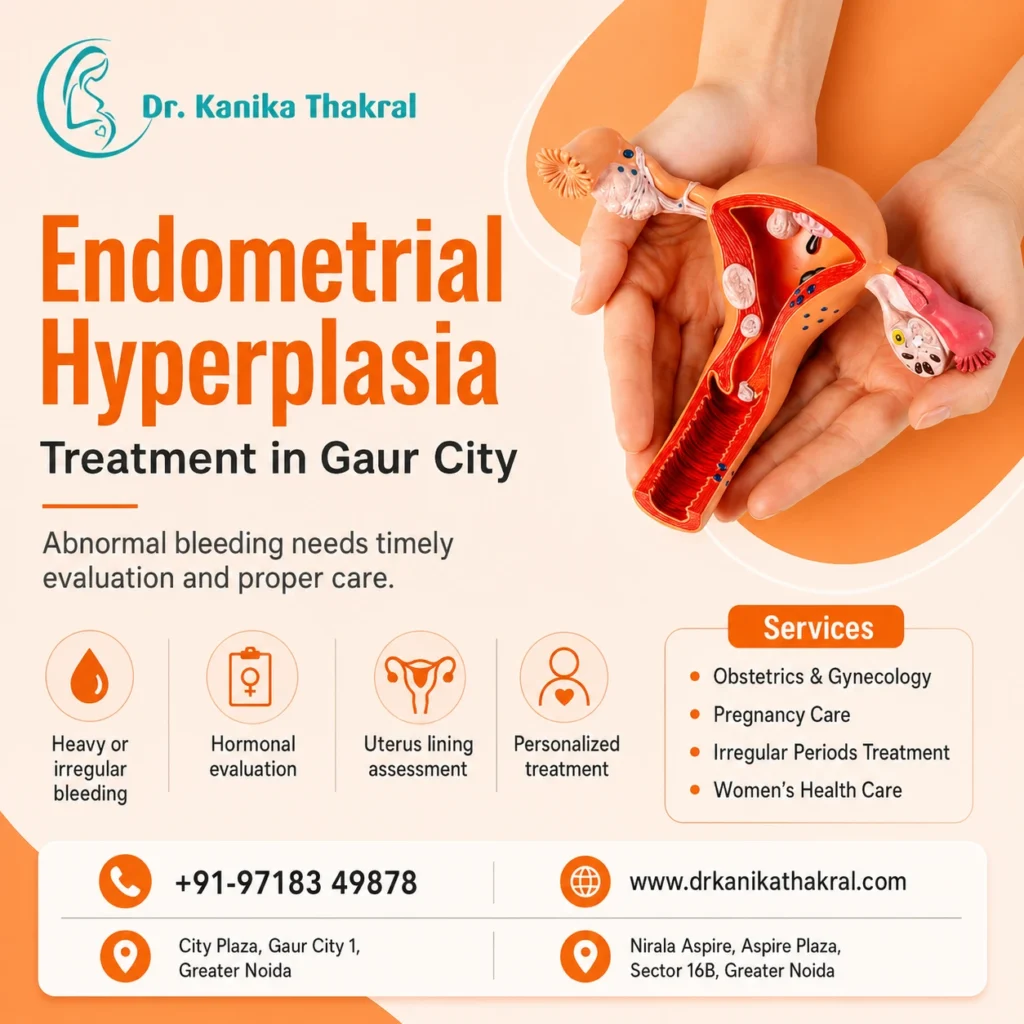
Endometrial Hyperplasia Treatment in Gaur City
Endometrial Hyperplasia Treatment in Gaur City is important for women who have heavy periods, bleeding between periods, bleeding after menopause, or repeated cycle changes. Endometrial hyperplasia means the inner lining of the uterus becomes thicker than normal. This lining is called the endometrium.
Many women ignore abnormal bleeding because they think it is due to stress, age, weakness, or hormonal changes. However, repeated heavy bleeding or irregular bleeding should not be ignored. Endometrial hyperplasia is commonly linked with abnormal uterine bleeding, and proper testing helps confirm the cause.
This condition can happen due to hormonal imbalance, irregular ovulation, PCOS, obesity, thyroid issues, or long gaps between periods. Therefore, timely care from a Gynecologist in Gaur City can help find the reason and guide the right treatment.
What Is Endometrial Hyperplasia?
Endometrial hyperplasia happens when the uterus lining grows more than expected. This usually happens when estrogen affects the lining without enough progesterone balance.
During a normal cycle, the uterus lining grows and then sheds during periods. However, when ovulation does not happen regularly, the lining may keep growing. As a result, periods may become heavy, delayed, or irregular.
Some types of endometrial hyperplasia are low risk. Others may need closer care because abnormal cells can sometimes increase future health risks. A biopsy helps confirm the type and guide treatment.
Common Symptoms That May Need Endometrial Hyperplasia Treatment in Gaur City
Symptoms may be different for every woman. Still, abnormal bleeding is the most common sign.
Common symptoms include:
- Heavy periods
- Long periods
- Bleeding between periods
- Periods after long gaps
- Spotting after periods
- Bleeding after menopause
- Irregular cycles
- Pelvic heaviness
- Tiredness due to blood loss
- Weakness or low energy
If bleeding is heavy or keeps returning, do not delay care. Early diagnosis can help prevent further problems.
Causes of Endometrial Hyperplasia
Endometrial hyperplasia often happens due to hormone imbalance. The uterus lining may grow more when estrogen is high and progesterone is low.
Common causes and risk factors include:
- Irregular ovulation
- PCOS
- Obesity
- Thyroid problems
- Diabetes
- Long gaps between periods
- Perimenopause
- Estrogen-only hormone use
- Family history of uterus-related concerns
- Not getting periods regularly
Because many causes are possible, a proper Obstetrics & Gynecology evaluation is important.
Endometrial Hyperplasia and Irregular Periods Treatment
Endometrial hyperplasia is often linked with irregular cycles. If ovulation does not happen on time, periods may come late. Then bleeding may become heavy when periods finally start.
This is why Irregular Periods Treatment should not only focus on starting the period once. Instead, the main cause should be checked.
Your doctor may check hormones, ultrasound findings, weight history, thyroid levels, PCOS signs, and bleeding pattern. After that, treatment becomes more accurate.
When Should You Worry About Abnormal Bleeding?
Not every period change means endometrial hyperplasia. However, some signs need medical attention.
Consult early if you have:
- Heavy bleeding with clots
- Periods lasting more than usual
- Bleeding after menopause
- Bleeding between periods
- Periods after long gaps
- Frequent spotting
- Severe weakness with bleeding
- Irregular periods for many months
- Bleeding with pelvic pain
Bleeding after menopause should always be checked. It may happen due to many reasons, but proper evaluation is important.
Diagnosis Before Endometrial Hyperplasia Treatment in Gaur City
Diagnosis starts with your period history and symptoms. Your doctor may ask about bleeding pattern, cycle gap, pain, pregnancy history, medicines, weight changes, and past reports.
Tests may include:
- Pelvic ultrasound
- Transvaginal ultrasound
- Endometrial thickness check
- Hormone tests
- Thyroid test
- Blood sugar test
- Pregnancy test if needed
- Pap smear if advised
- Endometrial biopsy
An endometrial biopsy checks a small sample of the uterus lining under a microscope. This helps confirm whether hyperplasia is present and what type it is.
Endometrial Hyperplasia Treatment in Gaur City
Endometrial Hyperplasia Treatment in Gaur City depends on the type of hyperplasia, age, symptoms, pregnancy plans, and biopsy report. Treatment is not the same for every woman.
Common care options may include:
- Hormonal treatment
- Progesterone-based treatment if advised
- Cycle regulation
- Weight management guidance
- PCOS care if present
- Follow-up ultrasound
- Repeat biopsy if needed
- Further treatment if abnormal cells are found
Some women may need only medical treatment and follow-up. However, if the report shows atypical changes or higher risk, your doctor may discuss stronger treatment options. In some cases, surgery may be considered, especially when pregnancy is not planned.
Can Endometrial Hyperplasia Affect Pregnancy Planning?
Endometrial health is important for pregnancy. If the uterus lining is too thick or unstable, it may affect cycle health and fertility planning.
Women who want pregnancy should discuss their plans clearly during consultation. Treatment may be planned in a way that supports future fertility when possible.
Good Pregnancy Care also starts before conception. If you have irregular bleeding, PCOS, obesity, or hormone imbalance, treating these concerns before pregnancy can support better planning.
Endometrial Hyperplasia and Pregnancy Care
Endometrial hyperplasia is usually diagnosed before pregnancy, not during normal pregnancy. However, women with a history of abnormal bleeding or hormonal concerns may need closer follow-up while planning pregnancy.
Proper Pregnancy Care helps monitor mother and baby health once pregnancy happens. It also helps detect risks early and plan safer care.
If you have a history of endometrial hyperplasia and want pregnancy, consult before trying. Your doctor can guide you about cycle health, ovulation, and follow-up.
Endometrial Hyperplasia and Safe Delivery
Endometrial hyperplasia treatment focuses on uterus lining health before pregnancy. Once pregnancy happens, care shifts toward regular pregnancy monitoring.
A Safe Delivery depends on many factors, including mother’s health, baby’s growth, pregnancy progress, blood pressure, sugar levels, and delivery condition. If you had hormone-related bleeding problems earlier, regular pregnancy follow-up becomes even more important.
Your doctor will guide delivery planning based on your pregnancy condition.
Role of Obstetrics & Gynecology Care
Obstetrics & Gynecology care is helpful because endometrial hyperplasia may be linked with periods, hormones, fertility, pregnancy planning, and long-term women’s health.
A complete evaluation may include cycle history, pelvic ultrasound, hormone checkup, biopsy guidance, and treatment planning.
If you are searching for the Best Gynecologist in Gaur City, choose timely consultation, proper diagnosis, clear guidance, and regular follow-up for abnormal bleeding concerns.
Women Clinic in Gaur City for Abnormal Bleeding Concerns
A Women Clinic in Gaur City can support women who need care for heavy bleeding, missed periods, painful periods, fertility planning, and pregnancy care.
For endometrial hyperplasia, diagnosis matters a lot. Without proper testing, it may be hard to know whether bleeding is due to hormones, fibroids, polyps, PCOS, thyroid issues, or uterus lining changes.
So, do not depend only on temporary medicines. Get the cause checked first.
Lifestyle Care for Endometrial Health
Lifestyle care can support hormonal balance and treatment results. It is especially helpful if weight gain, PCOS, diabetes, or insulin resistance is present.
Helpful steps include:
- Maintain a healthy weight
- Eat balanced meals
- Stay physically active
- Control sugar levels
- Sleep on time
- Manage stress
- Track periods
- Do not ignore heavy bleeding
- Avoid self-medication
- Attend follow-up visitsx
However, lifestyle care cannot replace medical treatment if biopsy confirms hyperplasia.
When to Consult Dr. Kanika Thakral
Consult Dr. Kanika Thakral if you have heavy periods, bleeding between periods, bleeding after menopause, repeated missed periods, or long cycle gaps.
You may need guidance for:
- Endometrial Hyperplasia Treatment in Gaur City
- Irregular Periods Treatment
- Obstetrics & Gynecology evaluation
- Uterus lining checkup
- Hormonal bleeding concerns
- Pregnancy Care planning
- Safe Delivery guidance after pregnancy
- Women’s health consultation
Early care can help find the cause and guide the right treatment.
FAQs
1. What is endometrial hyperplasia?
Endometrial hyperplasia means the uterus lining becomes thicker than normal. It may cause heavy bleeding, irregular bleeding, or bleeding after menopause.
2. What are the common symptoms?
Common symptoms include heavy periods, long periods, bleeding between periods, periods after long gaps, and postmenopausal bleeding.
3. Is endometrial hyperplasia serious?
Some types are low risk, while some need closer care. A biopsy helps confirm the type and guide treatment.
4. How is endometrial hyperplasia diagnosed?
Doctors may suggest ultrasound, hormone tests, and endometrial biopsy based on symptoms and age.
5. Is treatment possible?
Yes, treatment is possible. It may include hormonal treatment, cycle care, follow-up scans, biopsy follow-up, or further treatment if needed.
6. Can it affect pregnancy planning?
It may affect cycle health and fertility planning in some women. Proper treatment and follow-up can help support safer pregnancy planning.
