
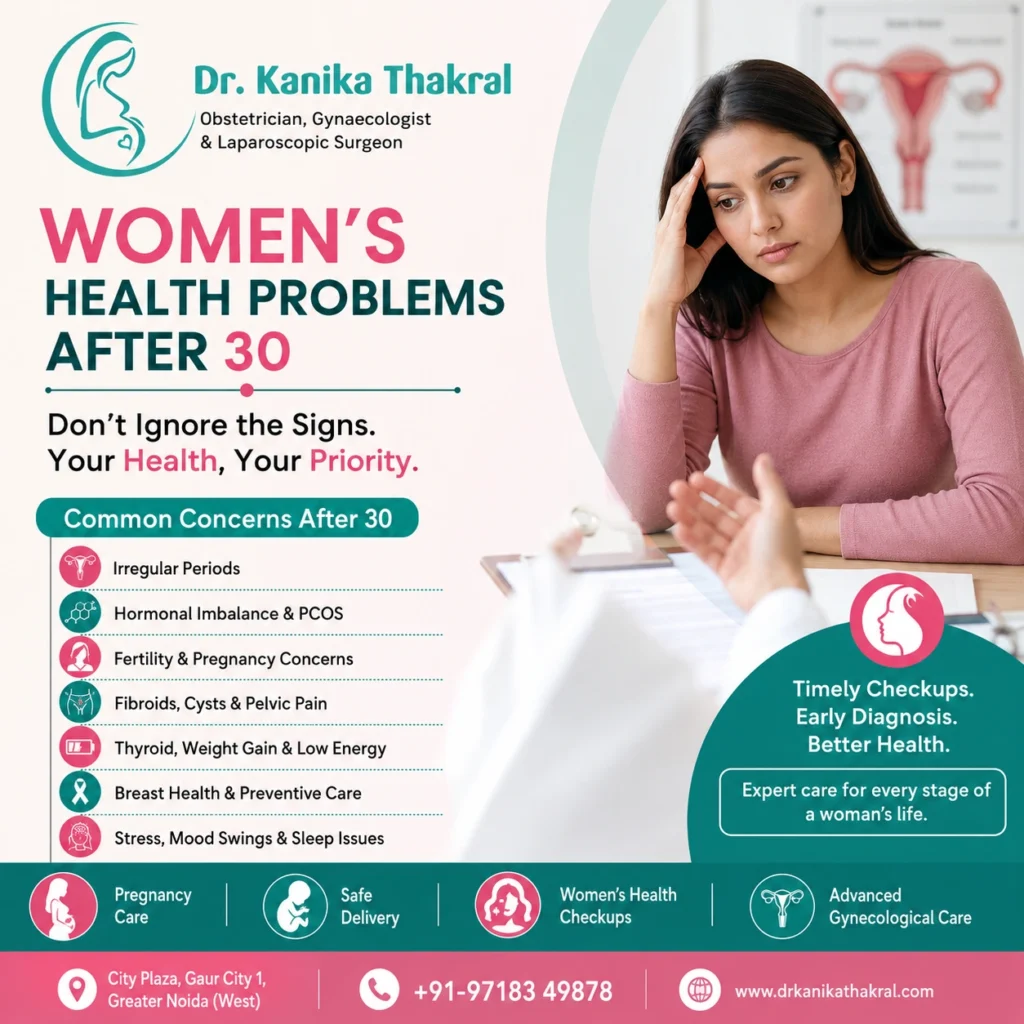
Women’s Health Problems After 30
Women’s Health Problems After 30 are common because the body starts changing with age, hormones, stress, lifestyle, and pregnancy planning. Many women notice changes in periods, weight, skin, mood, energy, and fertility after this age. Some changes may be normal, but repeated symptoms should not be ignored.
After 30, women often manage many responsibilities at the same time. Work pressure, family life, pregnancy planning, motherhood, and lack of rest can affect health. As a result, small symptoms may slowly become bigger concerns if they are not checked on time.
At Dr. Kanika Thakral’s clinic, women get complete guidance for Obstetrics & Gynecology, menstrual health, pregnancy planning, and preventive care. Timely checkups can help detect Women’s Health Problems After 30 early and manage them in a better way.
Why Women’s Health Problems After 30 Need Attention
The age of 30 is an important stage for women’s health. It is not old age, but it is a time when hormonal, physical, and lifestyle-related changes become more noticeable. Many women start seeing changes in their menstrual cycle, body weight, skin, hair, sleep, and emotional health.
In many cases, women ignore these signs because they feel busy or think the symptoms are normal. However, irregular periods, heavy bleeding, pelvic pain, unusual discharge, breast changes, and difficulty conceiving should not be taken lightly. These symptoms may be linked to PCOS, thyroid imbalance, fibroids, ovarian cysts, infection, or hormonal changes.
Regular consultation with a gynecologist helps find the cause early. It also helps women avoid unnecessary fear. If you are looking for a trusted Gynecologist in Gaur City, Dr. Kanika Thakral can guide you with proper evaluation and patient-friendly care.
Common Women’s Health Problems After 30
Many Women’s Health Problems After 30 begin with small signs. These signs may include delayed periods, heavy bleeding, spotting, tiredness, mood swings, acne, hair fall, weight gain, or pelvic discomfort. At first, these symptoms may look minor. But if they continue, they need medical attention.
Some common concerns after 30 include PCOS, hormonal imbalance, thyroid problems, fibroids, ovarian cysts, fertility concerns, breast changes, and pregnancy-related complications. Many women also face low energy, poor sleep, stress, and vitamin deficiencies.
The good news is that most of these problems can be managed well with early diagnosis. A doctor may suggest lifestyle changes, medicines, blood tests, ultrasound, or follow-up care depending on the symptoms. Therefore, regular checkups are helpful even when the symptoms feel mild.
Menstrual Changes and Women’s Health Problems After 30
Menstrual changes are one of the most common Women’s Health Problems After 30. Some women notice delayed periods, heavy bleeding, painful periods, spotting between periods, or periods that come too often. These changes may happen due to stress, weight changes, poor sleep, travel, or hormonal imbalance.
However, if the problem continues for more than two to three cycles, it is better to consult a gynecologist. Irregular periods may be linked to PCOS, thyroid problems, fibroids, ovarian cysts, polyps, or other hormonal concerns. Heavy bleeding can also lead to weakness and low hemoglobin if it is ignored.
A proper checkup helps identify the real reason behind menstrual changes. Dr. Kanika Thakral can guide women with period problems, hormonal concerns, and preventive women’s health care. Early treatment can improve comfort, energy levels, and overall quality of life.
PCOS and Hormonal Health After 30
PCOS can continue after 30 and may affect periods, weight, skin, hair growth, and fertility. Some women have PCOS from a young age, while others understand it only when they start planning pregnancy. It may cause delayed periods, acne, hair fall, facial hair growth, weight gain, and difficulty conceiving.
Hormonal imbalance can also create many confusing symptoms. A woman may feel tired, irritated, low in energy, or unable to lose weight. These symptoms are often blamed on stress, but they may need medical evaluation.
PCOS is one of the common causes of irregular periods and infertility. The World Health Organization also notes that PCOS is a leading cause of irregular menstrual periods and a common cause of infertility. This is why women should not ignore long gaps between periods.
Fertility Concerns After 30
Fertility concerns are also common after 30. Many women plan pregnancy later due to career, marriage, personal choices, or health reasons. Pregnancy after 30 is common, and many women have healthy pregnancies. However, fertility may gradually change with age, so awareness is important.
If you are planning pregnancy, a preconception consultation can help. Your doctor may check your cycle history, thyroid level, sugar level, weight, medicines, past infections, and previous pregnancy history. This gives a clear idea of your health before conception.
If periods are irregular, ovulation may also be irregular. In such cases, pregnancy planning may need extra support. Early advice can save time and reduce confusion. Dr. Kanika Thakral provides guidance for fertility planning, PCOS-related concerns, and complete women’s health care.
Pregnancy Care After 30
Pregnancy after 30 needs proper care, but it does not mean every pregnancy will be difficult. Many women have smooth pregnancies and healthy babies after 30. The key is timely checkups, proper tests, healthy food, supplements, and regular follow-up.
Good Pregnancy Care should start before or soon after pregnancy is confirmed. Early visits help the doctor plan important blood tests, ultrasound scans, supplements, and screening tests. Women with thyroid, diabetes, high blood pressure, PCOS, fibroids, or previous miscarriage may need closer monitoring.
Folic acid is also important before and during early pregnancy. CDC recommends 400 mcg of folic acid daily for women who can become pregnant, and it is especially important before conception and during early pregnancy. Proper planning supports both mother and baby and also helps in preparing for Safe Delivery.
Pelvic Pain, Fibroids and Ovarian Cysts
Pelvic pain after 30 should not be ignored if it keeps coming back. Some women feel lower abdominal pain, heaviness, pain during periods, or pain during intercourse. These symptoms may be linked to fibroids, ovarian cysts, endometriosis, pelvic infection, urinary problems, or digestive issues.
Fibroids are non-cancerous growths in the uterus. They may cause heavy bleeding, pelvic pressure, frequent urination, painful periods, or pregnancy-related concerns in some women. Ovarian cysts are fluid-filled sacs in or on the ovary. Many cysts are harmless, but some need monitoring or treatment.
If you have repeated pain, heavy bleeding, or bloating, do not delay consultation. A checkup and ultrasound can help find the cause. Early diagnosis makes treatment easier and helps prevent the problem from becoming more serious.
Thyroid, Weight Gain and Low Energy
Many women after 30 complain of weight gain, tiredness, hair fall, mood changes, and low energy. These symptoms may happen due to thyroid imbalance, anemia, vitamin deficiency, poor sleep, stress, or hormonal changes. They may look like simple lifestyle problems, but they can affect daily life.
Thyroid problems can disturb periods and fertility. Low hemoglobin can cause weakness, dizziness, breathlessness, and tiredness. Vitamin D or B12 deficiency may also cause body pain, low energy, and mood changes.
Instead of guessing the reason, it is better to get evaluated. Your gynecologist may suggest blood tests based on your symptoms. Once the cause is clear, treatment becomes easier and more effective.
Breast Health and Preventive Checkups
Breast health is an important part of women’s health after 30. Women should be aware of breast changes such as lumps, nipple discharge, pain, skin dimpling, or changes in breast shape. Not every breast lump is cancer, but every new lump should be checked.
Cervical screening is also important for women’s health. ACOG explains that women aged 30 to 65 may have cervical screening with Pap test, HPV test, or co-testing depending on the recommended schedule and medical guidance. Your doctor can guide you about the right screening option based on your age and health history.
A good Women Clinic in Gaur City should not only treat problems. It should also guide women about prevention, screening, pregnancy planning, and long-term health. Preventive care can help detect many conditions early.
Lifestyle, Stress and Women’s Health Problems After 30
Lifestyle plays a big role in Women’s Health Problems After 30. Poor sleep, high stress, lack of exercise, unhealthy eating, and weight gain can disturb hormones and periods. These habits may also affect fertility, mood, skin, and energy levels.
Many women manage work, home, family, and personal responsibilities together. Because of this, they often ignore their own health. But self-care is not selfish. It is important for long-term wellbeing.
Simple changes can help. Regular walking, balanced meals, enough water, good sleep, and stress control can support hormonal balance. However, lifestyle changes should not replace medical care when symptoms are repeated or severe.
When to Visit a Gynecologist After 30
You should visit a gynecologist if your periods are irregular for more than two to three cycles. You should also consult if bleeding is very heavy, periods are very painful, or spotting happens between periods.
Pelvic pain, unusual discharge, itching, burning, pain during intercourse, breast changes, or difficulty conceiving should also be checked. These symptoms may need tests or treatment. Early consultation helps avoid delay.
If you are planning pregnancy after 30, preconception advice is helpful. If you are already pregnant, early antenatal care is important. Timely visits help the doctor plan scans, tests, supplements, and delivery care.
Why Choose Dr. Kanika Thakral?
Women need a doctor who listens with patience and explains things clearly. Many women delay consultation because they feel shy, busy, or unsure about their symptoms. But early guidance can make a big difference.
Dr. Kanika Thakral provides care for menstrual concerns, pregnancy planning, antenatal care, PCOS, hormonal issues, pelvic pain, preventive screening, and complete women’s health. If you are searching for the Best Gynecologist in Gaur City, you can consult Dr. Kanika Thakral for patient-friendly guidance.
Whether you need routine checkup, period problem treatment, fertility advice, or Pregnancy Care, timely consultation can help you make better health decisions. The goal is to support women at every stage of life with safe and practical care.
Final Thoughts on Women’s Health Problems After 30
Women’s Health Problems After 30 are common, but they should not be ignored. Irregular periods, heavy bleeding, pelvic pain, hormonal imbalance, PCOS, fertility concerns, breast changes, and pregnancy-related doubts all need proper attention.
The good news is that many health problems can be managed well with early diagnosis and regular follow-up. You do not have to wait until symptoms become severe. A timely checkup can give clarity and peace of mind.
For complete women’s health care, preventive screening, pregnancy planning, and guidance toward Safe Delivery, consult Dr. Kanika Thakral. Taking care of your health after 30 is not only about treating problems. It is about building a healthier future.
FAQs
1. What are common Women’s Health Problems After 30?
Common concerns include irregular periods, heavy bleeding, PCOS, hormonal imbalance, pelvic pain, ovarian cysts, fibroids, thyroid issues, fertility concerns, and pregnancy-related complications.
2. Should women visit a gynecologist regularly after 30?
Yes, regular gynecological checkups after 30 are helpful. They support menstrual health, cervical screening, breast health, fertility planning, and early detection of health concerns.
3. Is pregnancy after 30 risky?
Pregnancy after 30 can be healthy with proper care. Early consultation, regular tests, scans, and doctor guidance help improve pregnancy monitoring.
4. Can PCOS continue after 30?
Yes, PCOS can continue after 30. It may affect periods, weight, skin, hair growth, and fertility. Proper treatment and lifestyle changes can help manage it.
5. When should irregular periods be checked?
If periods are irregular for more than two to three cycles, very heavy, very painful, or linked with spotting, acne, weight gain, or hair growth, consult a gynecologist.
