
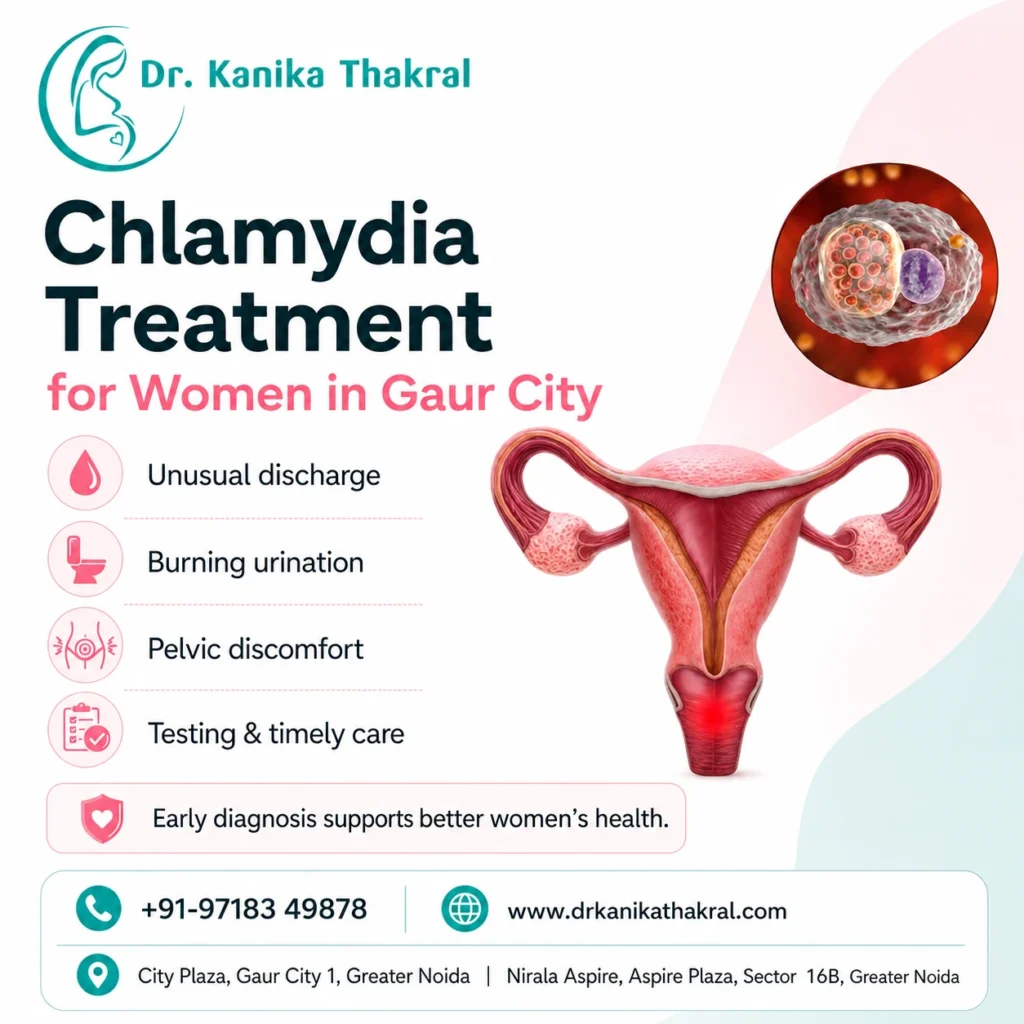
Chlamydia Treatment for Women in Gaur City: Symptoms, Testing and Care
Chlamydia Treatment for Women in Gaur City is important for women who have unusual discharge, burning during urination, pelvic pain, bleeding between periods, or pain during intercourse. Chlamydia is a bacterial sexually transmitted infection. It can affect the cervix, urinary area, rectum, throat, uterus, and fallopian tubes.
Many women with chlamydia do not notice clear symptoms. Because of this, the infection may stay hidden for some time. However, untreated chlamydia can affect the reproductive system and may lead to pelvic inflammatory disease.
If you have repeated infection-like symptoms, intimate discomfort, or possible exposure, do not delay care. A private consultation with a Gynecologist in Gaur City can help find the cause and guide the right treatment.
What Is Chlamydia and When Do You Need Chlamydia Treatment for Women in Gaur City?
Chlamydia is caused by bacteria called Chlamydia trachomatis. It can spread through sexual contact and may affect women of different age groups. In women, it often affects the cervix first.
You may need Chlamydia Treatment for Women in Gaur City if you have unusual discharge, burning urine, pelvic pain, spotting, or pain during intercourse. Testing may also be needed if your partner has an STI or if you had possible exposure.
Since symptoms can look like urine infection, vaginal infection, or cervicitis, self-treatment is not safe. A proper test helps confirm the cause.
Common Symptoms That May Need Chlamydia Treatment for Women in Gaur City
Chlamydia symptoms can be mild. Sometimes, there may be no symptoms at all. So, many women may not know they have the infection until testing is done.
Common symptoms may include:
- Unusual vaginal discharge
- Burning during urination
- Pelvic pain
- Lower abdominal discomfort
- Bleeding between periods
- Bleeding after intercourse
- Pain during intercourse
- Rectal pain or discharge in some cases
- Sore throat if throat infection is present
- No symptoms in many women
If symptoms continue or return, timely testing is important. Early care can reduce the risk of complications.
Why STD Testing for Women in Gaur City Matters
Testing matters because many infections can cause similar symptoms. Discharge, burning, itching, spotting, and pelvic pain may happen due to chlamydia, gonorrhea, yeast infection, bacterial infection, or cervicitis.
That is why STD Testing for Women in Gaur City should be done when symptoms or history suggest risk. A correct test helps your doctor choose the right treatment.
In addition, partner testing or treatment may also be needed in some cases. This helps reduce the chance of reinfection.
Chlamydia and Cervicitis Treatment in Gaur City
Chlamydia can cause cervicitis. Cervicitis means swelling or infection of the cervix. It may cause discharge, spotting, pelvic pain, or bleeding after intercourse.
Women looking for Cervicitis Treatment in Gaur City may need chlamydia testing if symptoms suggest infection. Treating only symptoms may not solve the problem if an STI is the cause.
Early diagnosis helps protect cervical health. Moreover, it can reduce the risk of infection spreading upward.
Chlamydia and Vaginal Infection-Like Symptoms
Chlamydia symptoms may feel like a vaginal infection or urine infection. However, these conditions are not the same.
A vaginal infection may cause itching, smell, burning, or discharge. Chlamydia may also cause discharge and discomfort. Because symptoms overlap, proper testing is important before starting treatment.
If symptoms keep coming back, your doctor may suggest a swab test, urine test, or STI test. This helps avoid wrong medicines.
Can Chlamydia Cause Pelvic Pain?
Yes, chlamydia may cause pelvic pain, especially if the infection spreads to the uterus or fallopian tubes. Untreated infection can lead to pelvic inflammatory disease, also called PID.
Pelvic pain should not be ignored if it comes with discharge, fever, burning urine, spotting, or pain during intercourse. Early treatment can help reduce the risk of long-term problems.
Chlamydia, Fibroid Treatment, and Ovarian Cyst Treatment
Chlamydia does not directly cause fibroids or ovarian cysts. However, pelvic pain, lower abdominal pressure, irregular bleeding, or discomfort can happen due to many different women’s health conditions.
If symptoms are not clearly due to infection, your doctor may check for other causes. These may include fibroids, ovarian cysts, urinary issues, or hormonal problems.
Fibroid Treatment may be needed if fibroids cause heavy bleeding, pelvic pressure, or pain. Similarly, Ovarian Cyst Treatment depends on cyst size, type, symptoms, and future pregnancy plans.
How Doctors Diagnose Chlamydia in Women
Diagnosis starts with symptoms and medical history. Your doctor may ask about discharge, burning urine, pelvic pain, bleeding, sexual history, partner symptoms, and past infections.
Tests may include:
- Urine test
- Vaginal swab
- Cervical swab
- Throat or rectal swab if needed
- Pregnancy test if required
- Testing for other STIs
- Pelvic examination if cervicitis symptoms are present
Screening is important because many women with chlamydia may have no symptoms. Regular testing is often advised for sexually active women at higher risk.
Chlamydia Treatment for Women in Gaur City
Chlamydia Treatment for Women in Gaur City depends on test results, symptoms, pregnancy status, and whether other infections are present. Chlamydia needs medical treatment with the right antibiotic.
Your care plan may include:
- Antibiotic treatment as advised
- Testing for other STIs
- Partner testing or treatment
- Avoiding sexual contact until treatment is complete
- Follow-up testing if advised
- Pregnancy-safe care if pregnant
- Cervicitis care if present
Complete the full treatment course as advised. Also, discuss partner care with your doctor, because reinfection can happen if the partner is not treated.
What Happens If Chlamydia Is Not Treated?
Untreated chlamydia can spread to the uterus and fallopian tubes. This may cause PID and increase the risk of long-term pelvic pain, fertility problems, and ectopic pregnancy.
Possible risks include:
- Pelvic inflammatory disease
- Long-term pelvic pain
- Fallopian tube damage
- Fertility problems
- Ectopic pregnancy risk
- Repeated cervicitis symptoms
- Infection spreading further
Because these risks can be serious, early testing and treatment matter.
Chlamydia Treatment During Pregnancy
Chlamydia during pregnancy needs careful medical care. If you are pregnant, tell your doctor before taking any medicine.
Treatment should be safe for pregnancy and based on medical advice. Follow-up may also be needed to confirm recovery and reduce risks.
Regular pregnancy visits help protect both mother and baby. Therefore, do not delay testing if symptoms or exposure are present.
Prevention Tips After Chlamydia Treatment
Prevention helps reduce the chance of reinfection.
Helpful steps include:
- Practice safe sexual habits
- Avoid sexual contact until treatment is complete
- Discuss partner testing
- Complete medicines as advised
- Do not self-medicate
- Get tested if symptoms return
- Avoid ignoring discharge or burning
- Keep follow-up appointments
- Test for other STIs if advised
These steps can support better intimate health and reduce repeated infection risk.
When to Consult Dr. Kanika Thakral for Chlamydia Treatment for Women in Gaur City
Consult Dr. Kanika Thakral if you have unusual discharge, burning urination, pelvic pain, bleeding after intercourse, or repeated infection symptoms.
You may need guidance for:
- Chlamydia Treatment for Women in Gaur City
- STD Testing for Women in Gaur City
- Cervicitis Treatment in Gaur City
- Gynecologist in Gaur City consultation
- Fibroid Treatment evaluation
- Ovarian Cyst Treatment evaluation
- Women’s health testing
- Partner-related infection concerns
Early consultation helps find the right cause and start proper care.
FAQs
1. What is chlamydia in women?
Chlamydia is a bacterial STI. In women, it can affect the cervix, urinary area, uterus, fallopian tubes, throat, or rectum.
2. What are common symptoms of chlamydia?
Symptoms may include unusual discharge, burning urination, pelvic pain, spotting, bleeding after intercourse, or pain during intercourse. Many women may have no symptoms.
3. Is STD testing important for chlamydia?
Yes. Testing helps confirm the infection because symptoms can look like vaginal infection, urine infection, or cervicitis.
4. Is chlamydia treatment possible?
Yes, treatment is possible with the right antibiotic. The treatment plan should be given by a doctor after proper testing.
5. Can chlamydia affect fertility?
Untreated chlamydia can spread and cause PID, which may affect fallopian tubes and fertility. Early treatment lowers this risk.
6. Can symptoms return after treatment?
Yes, symptoms may return if reinfection happens or partner treatment is missed. Follow-up and partner care are important.
