
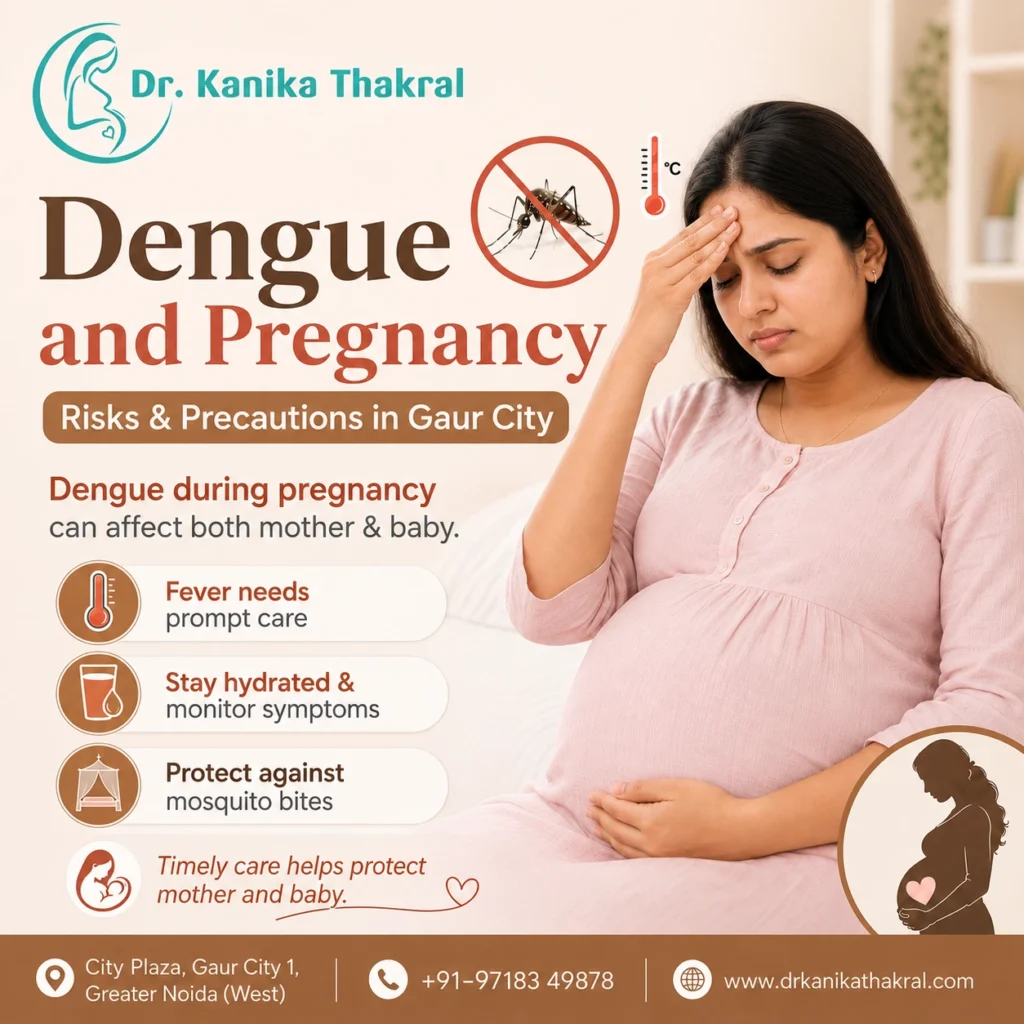
Dengue and Pregnancy in Gaur City – Risks, Precautions & Safe Care
Dengue and Pregnancy need careful attention. Dengue is a mosquito-borne viral infection. It can cause fever, body pain, weakness, vomiting, rash, and low platelet count. During pregnancy, these symptoms should never be ignored.
Pregnancy already makes the body work harder. Therefore, any fever or infection needs timely care. Dengue may increase health risks for both mother and baby, especially if symptoms become severe.
However, early diagnosis and proper monitoring can help reduce complications.
Dr. Kanika Thakral provides caring support for Pregnancy Care in Gaur City, fever during pregnancy, pregnancy monitoring, and High-Risk Pregnancy Care.
What Is Dengue?
Dengue is a viral infection. It spreads through the bite of an infected Aedes mosquito. These mosquitoes often bite during the day, especially in the early morning and evening.
Dengue is more common during and after the rainy season. It may also spread when water collects in open containers, coolers, pots, tyres, or drains.
The illness can be mild in some people. However, it can become serious in others.
During pregnancy, extra caution is needed because both mother and baby need monitoring.
Why Dengue During Pregnancy Needs Extra Care
Dengue during pregnancy can be risky because it may affect the mother’s health and the baby’s wellbeing. Some pregnant women may have high fever, dehydration, low platelets, bleeding risk, or weakness.
In some cases, dengue may increase the chance of Pregnancy complications. These may include premature birth, low birth weight, fetal distress, or other serious concerns.
CDC also notes that a pregnant woman can transmit dengue virus to the baby during pregnancy or around delivery. This is why timely care is important.
So, if you are pregnant and develop fever, do not self-medicate. Speak to your doctor.
Common Symptoms of Dengue in Pregnancy
Dengue symptoms may look like viral fever in the beginning. However, symptoms can become serious quickly.
Common symptoms include:
- High fever
- Severe headache
- Pain behind the eyes
- Body pain
- Joint pain
- Muscle pain
- Nausea
- Vomiting
- Rash
- Tiredness
- Low appetite
Some women may also feel dizziness, weakness, or dehydration.
Because symptoms overlap with other infections, proper testing is important.
Warning Signs You Should Not Ignore
Dengue warning signs need urgent medical attention. These signs may appear when fever starts reducing. Therefore, do not assume that falling fever always means recovery.
Contact your doctor quickly if you have:
- Severe abdominal pain
- Repeated vomiting
- Bleeding from gums or nose
- Blood in vomit or stool
- Severe weakness
- Restlessness
- Drowsiness
- Cold hands or feet
- Breathing difficulty
- Reduced urine
- Sudden swelling
- Reduced baby movements
CDC lists warning signs such as abdominal pain, persistent vomiting, fluid accumulation, bleeding, lethargy, restlessness, and liver enlargement. Patients with warning signs need close monitoring because they may progress to severe disease.
How Dengue Can Affect the Mother
Dengue can make a pregnant woman very weak. It may also cause dehydration, low blood pressure, and low platelet count.
In severe cases, it may increase the risk of bleeding or shock. This can become dangerous without proper care.
Also, high fever itself can make pregnancy uncomfortable. It may worsen nausea, weakness, body pain, and appetite loss.
Therefore, fever during pregnancy should always be discussed with a Gynecologist in Gaur City or your treating doctor.
How Dengue Can Affect the Baby
Dengue may affect the baby in some pregnancies. The risk depends on the severity of infection, pregnancy stage, mother’s condition, and timely treatment.
Possible concerns may include:
- Low birth weight
- Premature birth
- Fetal distress
- Reduced growth in some cases
- Need for close monitoring
- Risk around delivery if mother is infected late in pregnancy
CDC mentions harmful effects such as fetal death, low birth weight, and premature birth. However, data on pregnancy outcomes are still limited.
This means every case needs individual medical care.
Dengue and High-Risk Pregnancy
Dengue can turn a normal pregnancy into a pregnancy that needs closer monitoring. This is especially true if platelets fall, bleeding occurs, fever is high, or baby movements reduce.
A High risk pregnancy specialist can help monitor the mother and baby carefully. The doctor may suggest blood tests, ultrasound, fluid monitoring, and hospital care if needed.
Women with existing conditions such as high blood pressure, diabetes, anemia, twin pregnancy, previous pregnancy loss, or placenta concerns need extra care.
In such cases, High-Risk Pregnancy Care is very important.
Dengue Diagnosis During Pregnancy
Diagnosis usually starts with symptoms and medical history. Your doctor may ask when fever started, whether there is vomiting, rash, bleeding, pain, or mosquito exposure.
Tests may include:
- Dengue NS1 antigen test
- Dengue IgM or IgG test
- Complete blood count
- Platelet count
- Hematocrit
- Liver function tests
- Urine test if needed
Your doctor may repeat blood tests if symptoms continue. Platelet count and hematocrit monitoring are often important in dengue care.
Do not delay testing if fever is present during pregnancy.
Role of Pregnancy Ultrasound
A Pregnancy Ultrasound may be advised if your doctor wants to check baby growth, amniotic fluid, placenta, or baby wellbeing.
Ultrasound does not diagnose dengue. However, it helps monitor pregnancy when the mother has fever or infection.
Your doctor may suggest ultrasound if:
- Fever lasts longer
- Baby movements reduce
- Pregnancy is high risk
- There is abdominal pain
- Growth monitoring is needed
- The infection occurs in later pregnancy
This helps guide safer pregnancy care.
Role of Doppler Scan in Pregnancy
Doppler Scan in Pregnancy checks blood flow between mother, placenta, and baby. It may be suggested in selected cases.
Doppler may be useful when the doctor wants to assess baby wellbeing, placental blood flow, or fetal growth.
Not every dengue case needs Doppler. However, if there are concerns about fetal growth, reduced movements, or high-risk pregnancy, your doctor may advise it.
Always follow your gynecologist’s advice on scan timing.
Treatment of Dengue During Pregnancy
There is no specific home cure for dengue. Treatment focuses on careful monitoring, hydration, fever control, and preventing complications.
Your doctor may advise:
- Rest
- Fluids
- Fever medicine safe in pregnancy
- Blood tests
- Platelet monitoring
- Hospital care if needed
- Baby monitoring
- Ultrasound if required
Do not take painkillers without medical advice. Some medicines can increase bleeding risk and may be unsafe in dengue.
Also, avoid self-treatment based on online advice.
What Medicines Should Be Avoided?
Pregnant women should not take random fever or pain medicines during dengue. Some common painkillers may increase bleeding risk.
Avoid self-medicating with:
- Aspirin
- Ibuprofen
- Other NSAIDs unless your doctor advises
- Herbal or unknown fever remedies
- Platelet-boosting products without medical advice
Always ask your doctor before taking any medicine during pregnancy.
Hydration During Dengue
Hydration is very important in dengue. Fever, vomiting, and poor appetite can lead to dehydration.
Drink fluids as advised by your doctor. These may include water, coconut water, oral rehydration solution, soups, or homemade fluids.
However, if vomiting is repeated, oral fluids may not be enough. In such cases, medical care is needed.
Warning signs like reduced urine, dizziness, dry mouth, or severe weakness should not be ignored.
Food Tips During Dengue in Pregnancy
Food should be light, fresh, and easy to digest.
Helpful options include:
- Dal water
- Khichdi
- Curd if tolerated
- Coconut water
- Fresh fruits
- Soups
- Lemon water
- Soft home-cooked meals
- Protein-rich food as advised
Avoid oily, spicy, and outside food. Also, avoid stale food because stomach infection can worsen weakness.
Nutrition supports recovery, but it cannot replace medical treatment.
Mosquito Bite Prevention During Pregnancy
Prevention is very important. Dengue spreads through mosquito bites. So, reducing mosquito exposure can reduce risk.
Helpful precautions include:
- Use mosquito nets.
- Wear full-sleeve clothes.
- Use pregnancy-safe mosquito repellent after doctor advice.
- Keep doors and windows screened.
- Avoid water collection.
- Cover water containers.
- Clean coolers and plant trays.
- Use mosquito control at home.
- Avoid sitting near stagnant water.
CDC says EPA-registered insect repellents are safe and effective when used as directed, even for pregnant and breastfeeding women.
Remove Mosquito Breeding Sites
Mosquitoes breed in stagnant water. Even small water collections can become breeding spots.
Check these areas:
- Flower pots
- Coolers
- Buckets
- Tyres
- Open tanks
- Roof corners
- Balcony trays
- Pet bowls
- Drains
- Waste containers
Empty and clean water containers regularly. Also, keep surroundings dry and clean.
This is one of the most effective dengue prevention steps.
Dengue in the Third Trimester
Dengue near delivery needs special attention. This is because infection around delivery may increase risks for mother and baby.
The doctor may monitor platelets, bleeding risk, fetal wellbeing, and labour timing carefully.
If the mother has dengue close to delivery, the baby may also need observation after birth.
Therefore, fever in late pregnancy should never be ignored.
Can Dengue Affect Delivery Planning?
Dengue may affect delivery planning if the mother is unwell, platelets are low, or bleeding risk is high. However, the final decision depends on mother’s condition, baby’s condition, pregnancy week, and medical findings.
The doctor may plan close monitoring. In some cases, hospital admission may be needed.
Do not panic. Timely care helps doctors choose the safest option.
When Hospital Care May Be Needed
Hospital care may be needed if symptoms are severe or warning signs appear.
Admission may be advised in case of:
- Low platelets
- Severe weakness
- Dehydration
- Repeated vomiting
- Bleeding
- Low blood pressure
- Severe abdominal pain
- Reduced urine
- Reduced baby movements
- Breathlessness
- High-risk pregnancy
The aim is to monitor mother and baby closely and prevent complications.
Why Choose Dr. Kanika Thakral?
Pregnancy with fever needs careful attention. Dengue needs even more care because it can affect both mother and baby.
Dr. Kanika Thakral provides complete support for Dengue and Pregnancy, Dengue during pregnancy, fever evaluation, Pregnancy Care in Gaur City, Pregnancy Ultrasound guidance, and High-Risk Pregnancy Care.
If you need a trusted Gynecologist in Gaur City, you can consult Dr. Kanika Thakral for timely evaluation and pregnancy monitoring.
Final Thoughts
Dengue and Pregnancy should be taken seriously. Fever, body pain, vomiting, rash, and weakness during pregnancy need proper medical advice.
Dengue can increase risks in pregnancy, especially if warning signs appear. However, early testing, hydration, platelet monitoring, scan guidance, and close doctor follow-up can help manage the condition better.
For dengue fever during pregnancy, Pregnancy complications, Doppler Scan in Pregnancy, and High-Risk Pregnancy Care, consult Dr. Kanika Thakral.
Timely care can protect both mother and baby.
FAQs
1. Is dengue dangerous during pregnancy?
Dengue can be risky during pregnancy because it may cause dehydration, low platelets, bleeding risk, premature birth, low birth weight, or other complications.
2. What are common dengue symptoms in pregnancy?
Common symptoms include fever, headache, body pain, joint pain, nausea, vomiting, rash, weakness, and pain behind the eyes.
3. What warning signs need urgent care?
Severe abdominal pain, repeated vomiting, bleeding, severe weakness, breathing difficulty, reduced urine, or reduced baby movements need urgent medical care.
4. Can dengue affect the baby?
Yes, in some cases dengue may increase risks such as low birth weight, premature birth, fetal distress, or infection around delivery.
5. Is Pregnancy Ultrasound needed in dengue?
A Pregnancy Ultrasound may be advised if your doctor wants to check baby growth, fluid, placenta, or baby wellbeing.
