
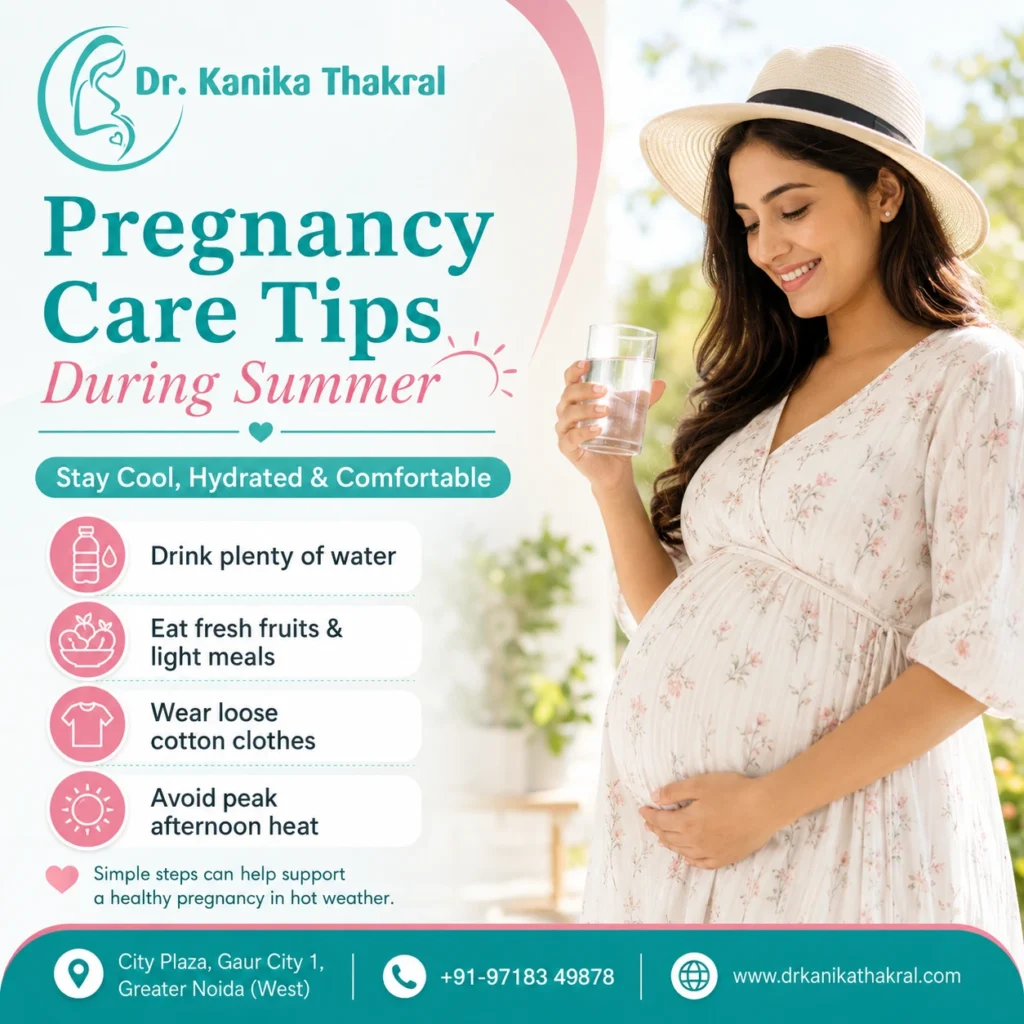
Pregnancy Care Tips During Summer – Stay Safe, Cool & Healthy
Pregnancy Care becomes more important during summer. Hot weather can make pregnant women feel tired, dehydrated, dizzy, or uncomfortable. Therefore, expecting mothers should take extra care of hydration, food, rest, clothing, and daily routine.
During pregnancy, the body already works harder. In summer, heat can add more stress. As a result, you may feel more sweating, weakness, swelling, or fatigue.
However, simple steps can help you stay safe and comfortable.
Dr. Kanika Thakral provides caring guidance for pregnancy health, summer safety, antenatal checkups, Safe Delivery, and complete Obstetrics & Gynecology care.
Why Summer Care Matters During Pregnancy
Summer heat can affect the body in many ways. Pregnant women may feel hotter than usual. They may also sweat more.
In addition, dehydration can happen faster in hot weather. This may cause headache, tiredness, dizziness, dark urine, or weakness.
So, summer care should not be ignored.
Good Pregnancy Care helps support both mother and baby. It also helps reduce heat-related discomfort during pregnancy.
Stay Hydrated Throughout the Day
Water is very important during pregnancy. It becomes even more important in summer.
Drink water throughout the day. Do not wait until you feel very thirsty. Thirst may be a late sign that your body needs fluids.
You can also include:
- Coconut water
- Lemon water
- Fresh homemade buttermilk
- Plain water
- Fresh fruit water
- Oral rehydration solution if advised
- Soups or light fluids
However, avoid sugary drinks and packaged juices. They may increase unnecessary calories.
Also, avoid too much caffeine. It can increase dehydration in hot weather.
Watch for Signs of Dehydration
Dehydration can make pregnancy uncomfortable. In some cases, it may also need medical attention.
Watch for these signs:
- Dry mouth
- Dark yellow urine
- Dizziness
- Headache
- Weakness
- Fast heartbeat
- Less urination
- Muscle cramps
- Feeling faint
- Nausea
If these symptoms continue, consult your doctor. Do not ignore repeated dizziness or weakness.
CDC notes that pregnancy can make dehydration more likely in hot weather because the body has to work harder to cool down. Therefore, hydration is very important in summer.
Avoid Going Out During Peak Heat
Try to avoid going out during the hottest hours of the day. Usually, afternoon heat is stronger.
Plan outdoor work in the morning or evening. Also, avoid standing in direct sunlight for long periods.
If going outside is necessary, use:
- A light cotton scarf
- Sunglasses
- Comfortable footwear
- Umbrella
- Water bottle
- Sunscreen if advised
- Loose cotton clothes
In addition, take small breaks in shaded or cool areas.
NHS advises staying out of heat when possible, using shade, wearing light clothes, and avoiding activity that makes the body hotter during hot weather.
Wear Loose and Comfortable Clothes
Clothing can make a big difference in summer.
Wear loose, breathable clothes. Cotton fabrics are usually more comfortable. Light colors may also feel cooler.
Avoid tight clothes because they can increase sweating and irritation. Tight clothing may also make swelling or discomfort worse.
Comfortable clothing supports better movement and keeps the body cooler.
Eat Light and Nutritious Meals
In summer, heavy meals can make you feel uncomfortable. Therefore, eat light but nutritious food.
Good options include:
- Fresh fruits
- Curd
- Buttermilk
- Sprouts
- Dal
- Vegetable khichdi
- Seasonal vegetables
- Whole grains
- Homemade salads
- Light paneer dishes
- Nuts in small quantity
Eat small meals at regular gaps. This can help reduce acidity, bloating, and nausea.
Also, do not skip meals. Pregnancy needs steady nutrition.
Choose Safe Summer Foods
Food safety is very important during pregnancy. In summer, food spoils faster. Therefore, eat fresh food.
Avoid stale food, uncovered street food, and cut fruits kept outside for long time.
Also, avoid raw or poorly washed salads from outside. These may increase the risk of stomach infection.
Choose clean, homemade, and fresh meals whenever possible.
Good food hygiene is an important part of Pregnancy Care.
Manage Swelling in Feet
Mild swelling in feet is common during pregnancy. It may increase in summer because heat can expand blood vessels.
To manage swelling:
- Keep feet elevated while resting.
- Avoid standing for long hours.
- Wear comfortable footwear.
- Drink enough water.
- Take short walks.
- Avoid very salty packaged snacks.
- Sleep on your left side if advised.
However, sudden swelling of face, hands, or severe swelling with headache or blurred vision needs urgent medical advice.
Do not ignore these warning signs.
Take Rest and Avoid Overexertion
Pregnancy is not the time to push the body too much, especially in summer.
Take rest when you feel tired. Also, avoid heavy work during hot hours.
Simple home tasks are fine if you feel comfortable. However, listen to your body.
If you feel dizzy, breathless, weak, or overheated, stop and rest.
ACOG advises pregnant women to stay hydrated, wear loose clothing, and avoid high heat and humidity during exercise to reduce heat stress.
Exercise Safely in Summer
Exercise can be helpful during pregnancy if your doctor allows it. However, summer exercise needs extra care.
Choose light activity. Walking, stretching, and prenatal yoga may be suitable for many women.
Still, avoid exercise in direct heat. Also, avoid intense workouts.
Safe exercise tips:
- Exercise in a cool place.
- Keep water nearby.
- Wear comfortable clothes.
- Stop if you feel dizzy.
- Avoid overexertion.
- Follow your doctor’s advice.
If you have high-risk pregnancy, bleeding, pain, or weakness, ask your doctor before starting exercise.
Maintain Regular Antenatal Checkups
Regular checkups are important in every season. However, in summer, they become even more useful.
Your doctor may check:
- Blood pressure
- Weight
- Baby growth
- Swelling
- Urine test
- Blood sugar if needed
- Hemoglobin
- Fetal heartbeat
- Any warning symptoms
These checkups help track mother and baby health.
If you are looking for the Best Gynecologist in Gaur City, you can consult Dr. Kanika Thakral for antenatal care and pregnancy guidance.
Summer Care in the First Trimester
The first trimester can bring nausea, vomiting, weakness, and tiredness. Summer heat can make these symptoms worse.
To feel better:
- Eat small meals.
- Keep sipping water.
- Avoid strong smells.
- Rest in a cool room.
- Eat light food.
- Avoid oily meals.
- Do not stay hungry for long.
If vomiting is frequent, consult your doctor. Severe vomiting can cause dehydration.
Summer Care in the Second Trimester
The second trimester is usually more comfortable for many women. However, heat can still cause tiredness, sweating, and swelling.
Stay active but avoid heat exposure. Also, continue your scans, medicines, and checkups as advised.
This is also a good time to discuss diet, weight gain, and safe physical activity with your doctor.
Summer Care in the Third Trimester
The third trimester can feel heavy. In summer, discomfort may increase due to swelling, sleep issues, and fatigue.
During this stage, take extra rest. Also, avoid unnecessary travel in peak heat.
Keep your hospital bag and important reports ready near the due date.
Discuss labour signs, delivery plan, and Normal Delivery possibility with your doctor. Your doctor will guide you based on baby position, health condition, and pregnancy progress.
Pregnancy Care for Safe Delivery
Every mother wants a healthy pregnancy and safe birth. Good summer habits can support overall wellbeing.
For Safe Delivery, regular monitoring is important. Diet, hydration, rest, scans, and timely checkups all matter.
Delivery type depends on many factors. These include baby position, placenta, amniotic fluid, blood pressure, sugar levels, labour progress, and mother’s health.
If conditions are suitable, Normal Delivery may be possible. However, the safest option should always be chosen after medical evaluation.
Irregular Periods Before Pregnancy
Some women have irregular cycles before pregnancy. They may have delayed periods, PCOS, thyroid problems, or hormonal imbalance.
If you needed Irregular Periods Treatment before conception, share this history with your doctor. It may help in pregnancy dating and early pregnancy planning.
Correct pregnancy dating is important for scans, tests, and delivery planning.
So, always share your menstrual history during your first pregnancy visit.
Keep Skin Comfortable in Summer
Pregnancy can make skin more sensitive. Summer heat can cause sweating, itching, rashes, or pigmentation.
Helpful tips include:
- Wear breathable clothes.
- Keep skin dry.
- Use mild soap.
- Avoid harsh skincare.
- Use sunscreen if advised.
- Avoid scratching itchy areas.
- Stay hydrated.
If itching is severe, especially on palms or soles, consult your doctor. It may need evaluation.
Sleep Better During Hot Weather
Sleep can be difficult in summer. Pregnancy already makes sleep challenging, especially in later months.
Try these tips:
- Keep the room cool.
- Wear light clothes.
- Use a comfortable pillow.
- Take a lukewarm bath before sleep.
- Avoid heavy dinner.
- Keep water near your bed.
- Sleep on your side if advised.
Better sleep supports mood, energy, and pregnancy health.
Warning Signs You Should Not Ignore
Some symptoms need quick medical advice.
Contact your doctor if you have:
- Severe dizziness
- Fainting
- High fever
- Severe headache
- Blurred vision
- Reduced baby movements
- Heavy bleeding
- Severe abdominal pain
- Burning urination
- Continuous vomiting
- Sudden swelling of face or hands
- Breathlessness
- Signs of heat stroke
NHS says heatstroke is an emergency if heat exhaustion does not improve after cooling down. Therefore, pregnant women should not delay help if heat-related symptoms become severe.
Why Choose Dr. Kanika Thakral?
Pregnancy needs caring guidance in every season. During summer, mothers need extra support for hydration, heat safety, diet, swelling, rest, and warning signs.
Dr. Kanika Thakral provides complete Obstetrics & Gynecology care, pregnancy checkups, Pregnancy Care, Irregular Periods Treatment, and delivery guidance.
If you need a trusted Women Clinic in Gaur City, you can consult Dr. Kanika Thakral for personalized pregnancy advice.
Final Thoughts
Summer can make pregnancy more tiring. However, the right habits can help you stay safe and comfortable.
Drink enough water. Eat fresh food. Avoid peak heat. Wear loose clothes. Rest well. Also, never miss antenatal checkups.
For Pregnancy Care, Safe Delivery guidance, and Normal Delivery planning, consult Dr. Kanika Thakral.
A healthy mother and a healthy baby start with timely care.
FAQs
1. Why is Pregnancy Care important during summer?
Pregnancy Care is important during summer because heat can increase dehydration, fatigue, dizziness, and swelling.
2. How much water should I drink during pregnancy in summer?
Water needs vary. However, you should drink regularly throughout the day and consult your doctor if you feel thirsty, dizzy, or dehydrated.
3. Can heat affect pregnancy?
Yes, extreme heat can increase the risk of dehydration and heat-related illness. So, staying cool and hydrated is important.
4. What foods are good during summer pregnancy?
Fresh fruits, curd, buttermilk, dal, vegetables, whole grains, and homemade light meals are good choices.
5. Can I exercise during summer pregnancy?
Yes, if your doctor allows it. Exercise in a cool place and avoid high heat, direct sunlight, and overexertion.
6. What should I avoid during summer pregnancy?
Avoid dehydration, direct afternoon heat, stale food, excessive caffeine, heavy exertion, and long outdoor exposure.
