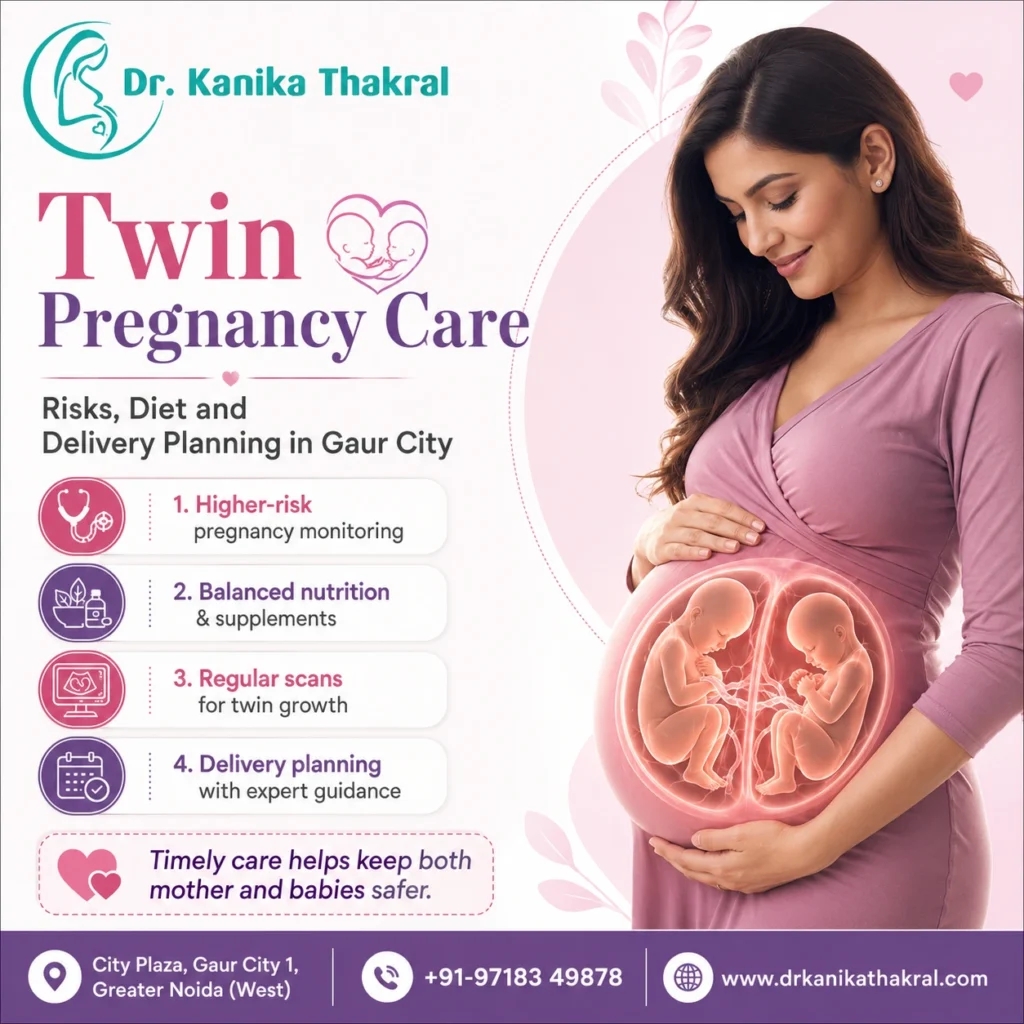
Twin Pregnancy Care in Gaur City: Risks, Diet and Delivery Planning
Twin Pregnancy Care needs closer monitoring than a single pregnancy. When a woman is carrying two babies, the body goes through extra changes. Because of this, regular checkups, proper diet, scan follow-ups, and delivery planning become very important.
Twin pregnancy can be a joyful experience. However, it can also bring extra health concerns for the mother and babies. These may include early delivery, high blood pressure, diabetes during pregnancy, anemia, low birth weight, or growth differences between the babies.
Dr. Kanika Thakral provides guidance for Twin Pregnancy Care in Gaur City, Twin pregnancy risks, diet planning, High-Risk Pregnancy Care, and safe delivery preparation.
What Is Twin Pregnancy?
Twin pregnancy means a woman is carrying two babies in the same pregnancy. Twins may be identical or non-identical. The type depends on how pregnancy begins and how the babies develop.
Some twins have separate placentas and sacs. Some may share a placenta. This difference matters because shared placenta pregnancies need closer monitoring.
Early ultrasound helps confirm the number of babies, heartbeats, placenta type, and pregnancy dating. This information helps plan pregnancy care properly from the beginning.
Why Twin Pregnancy Needs Extra Care
Twin pregnancy puts more demand on the mother’s body. The uterus grows faster, blood volume increases more, and nutritional needs are higher. Also, both babies need regular growth monitoring.
Because of this, the pregnancy may need more frequent visits and scans. The care plan may also change based on baby growth, mother’s blood pressure, sugar levels, anemia status, and symptoms.
Good care does not mean panic. It means staying alert and taking timely steps.
Common Twin Pregnancy Risks
Twin pregnancy risks are higher than single pregnancy risks. However, many women with twins have healthy pregnancies with proper care and monitoring.
Common risks may include:
- Preterm birth
- Low birth weight
- High blood pressure
- Preeclampsia
- Gestational diabetes
- Anemia
- Excessive vomiting
- Breathlessness
- Back pain
- Swelling
- Growth difference between babies
- Placenta-related concerns
- Higher chance of delivery-related planning needs
These risks do not happen in every case. Still, awareness helps in early detection.
Preterm Birth in Twin Pregnancy
Preterm birth is one of the most common concerns in twin pregnancy. It means delivery happens before full term. Since there are two babies, the uterus may stretch more and labor may start earlier.
Signs of preterm labor may include regular tightening, pelvic pressure, backache, watery discharge, bleeding, or period-like cramps.
These symptoms should not be ignored. Early guidance can help decide whether monitoring, medicines, rest, or further evaluation is needed.
High Blood Pressure and Twin Pregnancy
High blood pressure is more common in twin pregnancies. It may sometimes be linked with preeclampsia, which needs careful monitoring.
Warning signs may include severe headache, swelling of face or hands, visual changes, upper abdominal pain, sudden weight gain, or high BP readings.
Regular BP checks are important during Twin Pregnancy Care. If BP starts rising, timely action helps reduce risk for mother and babies.
Gestational Diabetes in Twin Pregnancy
Twin pregnancy may increase the chance of gestational diabetes. This means blood sugar becomes high during pregnancy.
Gestational diabetes can affect baby growth and pregnancy safety if not controlled. However, it can often be managed with diet, activity, monitoring, and medicines when needed.
Sugar testing should be done as advised. Also, diet should be planned carefully, not randomly.
Anemia in Twin Pregnancy
Anemia is common in pregnancy, and twin pregnancy can increase the risk. The mother’s body needs more blood to support two babies.
Symptoms may include weakness, dizziness, tiredness, breathlessness, fast heartbeat, or pale skin. Low hemoglobin should be managed early.
Iron, folic acid, and other supplements should be taken only as advised. Regular blood tests help track improvement.
Twin Pregnancy Diet
Twin pregnancy diet should be balanced, nutritious, and easy to follow. It does not mean eating double the food. Instead, the focus should be on quality, protein, vitamins, minerals, hydration, and healthy weight gain.
A good diet may include:
- Protein-rich foods
- Seasonal fruits
- Green vegetables
- Whole grains
- Milk or dairy options if suitable
- Lentils and beans
- Nuts and seeds if advised
- Iron-rich foods
- Calcium-rich foods
- Enough water
Avoid crash diets, overeating sugar, skipping meals, and self-starting supplements.
Protein Needs in Twin Pregnancy
Protein is important for baby growth and mother’s strength. In twin pregnancy, protein needs may be higher. However, the exact amount depends on weight, health status, food habits, and pregnancy stage.
Vegetarian protein options may include dal, paneer, curd, milk, chana, rajma, sprouts, tofu, soybean, nuts, seeds, and balanced mixed meals.
Protein should be included in every major meal. This helps maintain energy and supports healthy growth.
Weight Gain in Twin Pregnancy
Weight gain is usually more in twin pregnancy than in single pregnancy. However, the right weight gain depends on pre-pregnancy weight, BMI, diet, activity level, and baby growth.
Too little weight gain may affect baby growth. Too much weight gain may increase the risk of diabetes, BP issues, swelling, and delivery difficulty.
Therefore, weight should be tracked during checkups. Dr. Kanika Thakral can guide what is healthy for your case.
Foods to Avoid in Twin Pregnancy
Certain foods and habits should be avoided during pregnancy to reduce health risks.
Avoid or limit:
- Unpasteurized food items
- Raw or undercooked food
- Excess caffeine
- Alcohol
- Smoking
- High-sugar snacks
- Very oily meals
- Street food with hygiene concerns
- Random herbal supplements
- Self-medication
Safe food habits help reduce infection risk and support better pregnancy health.
Hydration and Rest
Hydration is important in twin pregnancy. Dehydration may worsen tiredness, constipation, headache, and contractions in some cases.
Drink enough water through the day. Coconut water, soups, buttermilk, and fresh fluids may also help if suitable.
Rest is also important. As pregnancy grows, the body may feel heavier. Listen to your body and avoid overexertion.
Hormonal Imbalance and Twin Pregnancy
Hormonal Imbalance before pregnancy may affect ovulation, periods, fertility, or early pregnancy planning. Some women with hormone-related concerns may conceive twins naturally or after fertility treatment.
During twin pregnancy, hormones also rise more than usual. This may increase nausea, breast tenderness, tiredness, mood changes, or acidity in some women.
If you had PCOS, thyroid issues, irregular periods, or fertility treatment history, share all details during consultation. This helps plan better monitoring.
Scan Monitoring in Twin Pregnancy
Scans are very important in twin pregnancy. They help check baby growth, fluid levels, placenta, cervix length, and any growth difference between the babies.
The scan schedule depends on the type of twins. Twins sharing one placenta may need closer monitoring than twins with separate placentas.
Regular scan follow-up helps detect concerns early and supports better planning.
Growth Difference Between Twins
Sometimes, one baby may grow slower than the other. This is called growth discordance. It may happen due to placenta-related factors or other reasons.
If growth difference is found, more frequent monitoring may be needed. Your doctor may track baby weight, blood flow, fluid levels, and movements.
Early detection helps plan the next step in a safer way.
High-Risk Pregnancy Care
Twin pregnancy is often managed with a High-Risk Pregnancy Care approach because the chance of complications is higher.
This does not mean something will definitely go wrong. It means pregnancy needs closer attention.
High-risk care may include:
- More frequent checkups
- BP monitoring
- Sugar testing
- Hemoglobin checks
- Growth scans
- Cervix monitoring
- Fetal wellbeing checks
- Diet guidance
- Delivery planning
This approach helps support mother and baby safety.
Warning Signs You Should Not Ignore
You should seek guidance quickly if you notice unusual symptoms.
Warning signs include:
- Vaginal bleeding
- Severe abdominal pain
- Regular contractions
- Watery discharge
- Severe headache
- Blurred vision
- Sudden swelling
- Reduced baby movements
- Fever
- Chest pain or severe breathlessness
- Very high BP reading
Do not wait at home if symptoms feel serious.
Delivery Planning in Twin Pregnancy
Delivery planning should start before the due date. The plan depends on baby positions, placenta, pregnancy weeks, growth, mother’s health, and any complications.
Some twin pregnancies may be suitable for vaginal birth. Others may need planned cesarean delivery. The decision is made after reviewing the full pregnancy picture.
The goal is safe delivery for both mother and babies.
Can Normal Delivery Happen With Twins?
Normal delivery may be possible in selected twin pregnancies. Usually, the position of the first baby plays an important role. If the first baby is head-down and there are no major complications, vaginal delivery may be considered in suitable cases.
However, if baby positions are not suitable, there is fetal distress, placenta concern, previous surgery concern, or other complications, cesarean delivery may be safer.
Dr. Kanika Thakral can guide the best delivery plan based on your reports.
When Can Twin Delivery Happen?
Twin pregnancies often deliver earlier than single pregnancies. The exact timing depends on the type of twins, baby growth, placenta, mother’s health, and pregnancy complications.
Some women may need early delivery if there is high BP, growth restriction, fluid problem, fetal distress, or other concerns.
This is why regular monitoring in the third trimester is very important.
Preparing for Delivery
Preparing early can reduce stress. Keep all reports ready and discuss the delivery plan in advance.
Important preparation steps include:
- Keep scan reports organized.
- Track baby movements.
- Follow checkup schedule.
- Discuss delivery timing.
- Understand warning signs.
- Pack delivery essentials early.
- Plan family support.
- Follow diet and medicine advice.
- Ask questions during visits.
Twin pregnancy can feel overwhelming, but planning helps.
After Delivery Care
After twin delivery, the mother may need extra rest, nutrition, and emotional support. Feeding two babies can be tiring. Sleep may also become limited.
Post-delivery care should include bleeding monitoring, wound care if needed, nutrition, lactation support, mental health awareness, and follow-up visits.
Family support becomes very important during this time.
When Should You Consult Dr. Kanika Thakral?
Consult Dr. Kanika Thakral early if you are diagnosed with twin pregnancy. Early care helps confirm pregnancy type and plan monitoring.
You should also consult if you have:
- Twin pregnancy on ultrasound
- Previous pregnancy complications
- High BP
- Diabetes
- Thyroid concerns
- Hormonal imbalance
- Severe vomiting
- Bleeding
- Pain or contractions
- Reduced fetal movement
- Growth difference between babies
- Delivery planning questions
Timely guidance can make the journey safer and more organized.
Why Choose Dr. Kanika Thakral?
Dr. Kanika Thakral provides caring guidance for Twin Pregnancy Care in Gaur City, twin pregnancy monitoring, Twin pregnancy risks, Twin pregnancy diet, and safe delivery planning.
Women can consult Dr. Kanika Thakral for High-Risk Pregnancy Care, pregnancy complications, hormonal concerns, scan follow-up, and complete pregnancy support.
If you are looking for a Gynecologist in Gaur City, Dr. Kanika Thakral can guide you with privacy, comfort, and clear communication.
Final Thoughts
Twin Pregnancy Care needs regular monitoring, a balanced diet, scan follow-up, and early delivery planning. Since twin pregnancies carry higher risks than single pregnancies, timely care is very important.
With proper guidance, many women with twins complete pregnancy safely and prepare well for delivery.
For Twin Pregnancy Care in Gaur City, Twin pregnancy risks, Twin pregnancy diet, High-Risk Pregnancy Care, and delivery planning, consult Dr. Kanika Thakral.
FAQs
1. Is twin pregnancy high risk?
Twin pregnancy has higher risks than single pregnancy, so closer monitoring is usually needed.
2. What are common twin pregnancy risks?
Common risks include preterm birth, low birth weight, high BP, gestational diabetes, anemia, and growth difference between babies.
3. What should I eat in twin pregnancy?
A balanced diet with protein, fruits, vegetables, whole grains, calcium, iron-rich foods, and enough fluids is important.
4. Does twin pregnancy need more scans?
Yes, twin pregnancy usually needs more scan monitoring to check baby growth, fluid, placenta, and fetal wellbeing.
5. Can normal delivery happen with twins?
Normal delivery may be possible in selected cases, especially if the first baby is head-down and there are no major complications.
6. When should delivery be planned in twin pregnancy?
Delivery timing depends on baby growth, placenta type, mother’s health, pregnancy weeks, and any complications.
