
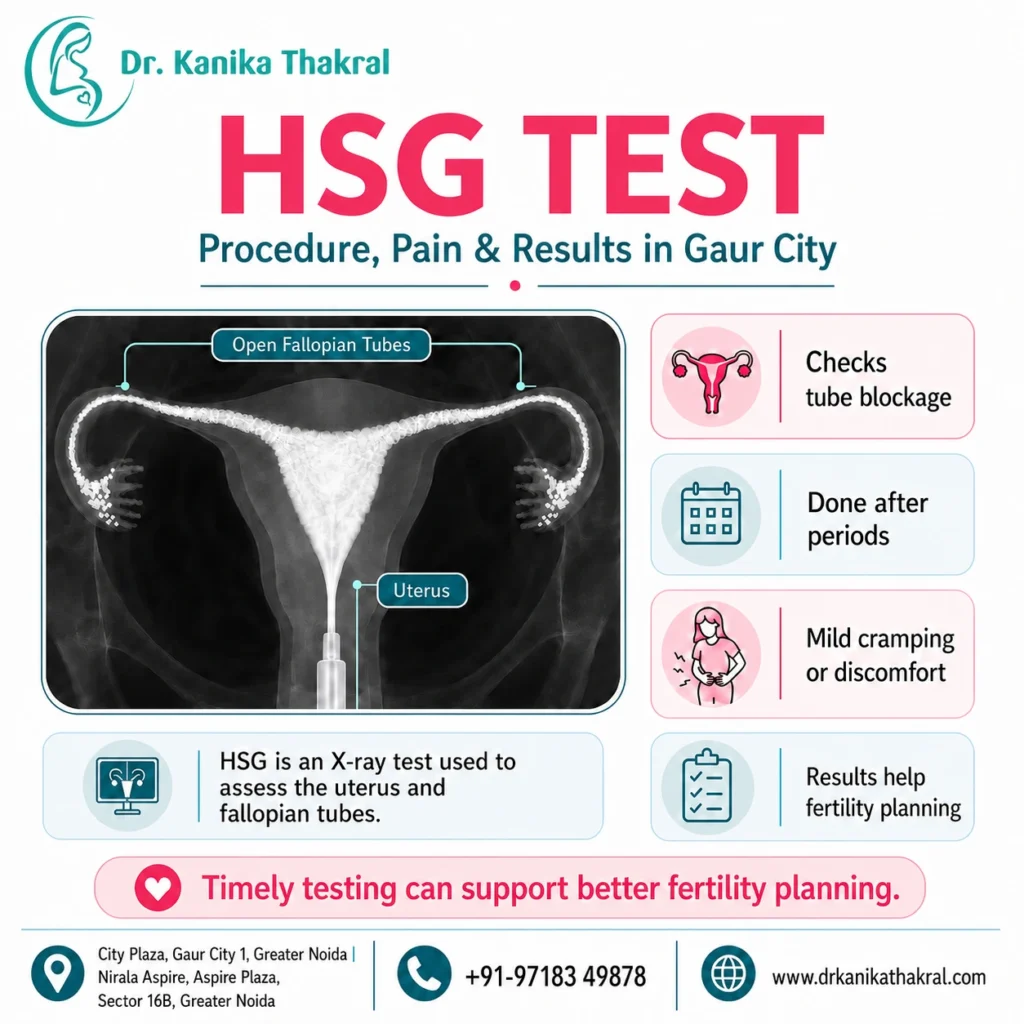
HSG Test in Gaur City: Procedure, Pain & Results
If you are trying to conceive but pregnancy is getting delayed, your doctor may suggest an HSG Test in Gaur City. HSG means hysterosalpingography. It is a special X-ray test used to check the uterus and fallopian tubes.
This test helps to find out whether the fallopian tubes are open or blocked. It also helps the doctor understand the shape of the uterus. These details are very important during fertility evaluation.
Many women feel nervous before an HSG test. They often worry about pain, procedure, and results. However, the test is usually short. With proper guidance, it becomes easier to understand and manage.
An HSG Test in Gaur City can be helpful for women who are looking for Infertility Treatment in Gaur City. It gives important information that helps in planning the next step.
What Is an HSG Test?
An HSG test is done to check the uterus and fallopian tubes. During the test, a special dye is gently passed through the cervix into the uterus. Then X-ray images are taken.
If the dye moves freely through the tubes, it usually means the tubes are open. If the dye stops at any point, it may suggest a blockage.
The fallopian tubes play an important role in natural pregnancy. The egg and sperm usually meet inside the tube. So, if one or both tubes are blocked, pregnancy may become difficult.
That is why an HSG test is commonly advised during fertility evaluation.
Why Is HSG Test Done?
Your doctor may suggest an HSG Test in Gaur City when pregnancy is not happening naturally. It may also be advised when there is a history of pelvic infection, previous pregnancy loss, or suspected tube blockage.
The test helps in checking:
- Whether fallopian tubes are open
- Whether one or both tubes are blocked
- Shape of the uterus
- Uterine cavity concerns
- Possible reason for delayed pregnancy
Sometimes, women with irregular cycles may also need fertility testing. In such cases, Irregular Periods Treatment and fertility evaluation may go together. However, HSG does not check hormones or ovulation. For that, your doctor may suggest blood tests or ultrasound.
Best Time for HSG Test
The best time for an HSG test is usually after your period ends and before ovulation starts. This timing helps ensure that you are not pregnant during the test.
In many cases, the test is planned between day 7 and day 10 of the menstrual cycle. However, the exact timing can vary. So, always follow the advice of your doctor.
If your period is delayed or there is any chance of pregnancy, you must inform your doctor before the test. This is important for your safety.
HSG Test Procedure Step by Step
Knowing the process can reduce fear. The HSG test is usually simple and quick.
First, you will be asked to lie down comfortably. The doctor will gently clean the area. Then a thin tube is placed through the cervix. After that, a contrast dye is slowly passed into the uterus.
X-ray images are taken while the dye moves inside the uterus and fallopian tubes. These images help the doctor see if the tubes are open or blocked.
The test may cause cramps for a short time. These cramps may feel like period pain. Some women feel only mild discomfort. Some may feel stronger cramps. Usually, the discomfort reduces soon after the test.
Is HSG Test Painful?
This is one of the most common questions women ask.
The pain level is different for every woman. Some women feel mild pressure. Some feel period-like cramps. A few women may feel more pain, especially if the tubes are blocked or the cervix is sensitive.
The good thing is that the pain is usually short. It often lasts only during the dye passage. After the test, mild cramps may continue for a few hours.
Your doctor may suggest pain relief before the test if needed. Do not take any medicine on your own. Always ask your doctor first.
What Happens After HSG Test?
After the HSG test, mild cramps are common. Light spotting may also happen for one or two days. This is usually normal.
You may also notice slight watery discharge because of the dye. It generally settles on its own.
Most women can return to normal routine the same day. However, if you feel tired or uncomfortable, taking rest for a few hours can help.
You should contact your doctor if you notice:
- Severe pain
- Heavy bleeding
- Fever
- Foul-smelling discharge
- Dizziness
- Increasing lower abdominal pain
These symptoms are not common and need medical attention.
What Do HSG Test Results Mean?
The result of an HSG Test in Gaur City helps in fertility planning.
If both fallopian tubes are open, the dye passes through both tubes and spills out. This usually means the tubal passage is clear.
If one tube is blocked, the dye may pass only from one side. Pregnancy may still be possible, depending on other fertility factors.
If both tubes are blocked, natural pregnancy may become difficult. In such cases, your doctor may suggest further evaluation and treatment.
If the uterus shows any shape-related concern, your doctor may advise more tests. The next step depends on your age, symptoms, reports, and pregnancy goals.
Can HSG Test Help in Pregnancy?
HSG is mainly a diagnostic test. It helps find the possible reason for delayed pregnancy. However, in some women, pregnancy may happen after the test. This may be because minor mucus plugs in the tubes get cleared during dye flow.
Still, HSG should not be seen as a guaranteed treatment. It is part of fertility evaluation.
If you are planning pregnancy, consult an experienced Gynecologist in Gaur City. A complete fertility plan may include cycle tracking, ovulation study, semen analysis, hormonal tests, and lifestyle guidance.
HSG Test and Fertility Treatment
An HSG Test in Gaur City is often one step in the fertility journey. It helps your doctor decide the right treatment direction.
If the tubes are open and ovulation is normal, basic fertility support may be advised. If there is a blockage or another concern, further treatment may be needed.
Women looking for Infertility Treatment in Gaur City should not delay evaluation. Early diagnosis can save time and reduce stress.
Fertility care is not only about one test. It includes understanding periods, ovulation, tube health, uterus health, and overall wellness.
HSG Test and Pregnancy Planning
Once pregnancy happens, regular Pregnancy Care becomes very important. Early checkups help monitor the health of both mother and baby.
Good pregnancy care also helps in planning for Safe Delivery. The type of delivery depends on many factors. These include mother’s health, baby’s position, pregnancy progress, and medical condition.
Some women may be able to plan for Normal Delivery. However, the final decision should always be based on medical safety.
So, fertility care and pregnancy care are connected. The right evaluation before pregnancy can help support a healthier journey later.
Who Should Consider HSG Test?
You may need an HSG test if you are trying to conceive and pregnancy is not happening. It may also be advised if you have a history of pelvic infection, previous ectopic pregnancy, or repeated pregnancy loss.
You should also consult if you have:
- Irregular periods
- Painful periods
- Delayed pregnancy
- Previous pelvic infection
- Known fertility concern
- Past surgery related to uterus or tubes
- History of miscarriage
A timely consultation can help you understand the right reason behind the problem.
Precautions Before HSG Test
Before the test, share your complete medical history with your doctor. This helps in making the procedure safer.
Tell your doctor if:
- You may be pregnant
- You have fever
- You have pelvic infection
- You have heavy bleeding
- You have allergy to dye or iodine
- You are taking regular medicines
- You had any previous reaction during a test
Do not hide symptoms. Even small details can be important.
How to Reduce Fear Before HSG Test
Feeling scared before the test is normal. Many women feel anxious because they do not know what to expect.
You can reduce fear by asking your doctor about the steps. Also, try to stay relaxed during the procedure. Deep breathing may help during cramps.
Remember, the test is short. The discomfort usually settles soon. Most importantly, the result can give helpful answers for your fertility journey.
When to Consult Dr. Kanika Thakral
You should consult Dr. Kanika Thakral if you are facing delayed pregnancy, irregular periods, painful periods, or fertility concerns.
You can also seek guidance for Irregular Periods Treatment, Pregnancy Care, and Infertility Treatment in Gaur City.
Proper diagnosis is the first step. Once the cause is clear, treatment becomes more focused and effective.
FAQs
1. What is an HSG test?
An HSG test is a special X-ray test used to check the uterus and fallopian tubes. It helps find whether the tubes are open or blocked.
2. Is HSG test painful?
Pain varies from woman to woman. Most women feel period-like cramps. The discomfort is usually short and reduces after the test.
3. When is the best time for HSG test?
The test is usually done after periods end and before ovulation. Your doctor will guide you about the right cycle day.
4. Can I get pregnant after HSG test?
Yes, pregnancy is possible after HSG if other fertility factors are normal. However, the test does not guarantee pregnancy.
5. What if my tubes are blocked?
If one or both tubes are blocked, your doctor may suggest further evaluation and treatment based on your reports and pregnancy plan.
