
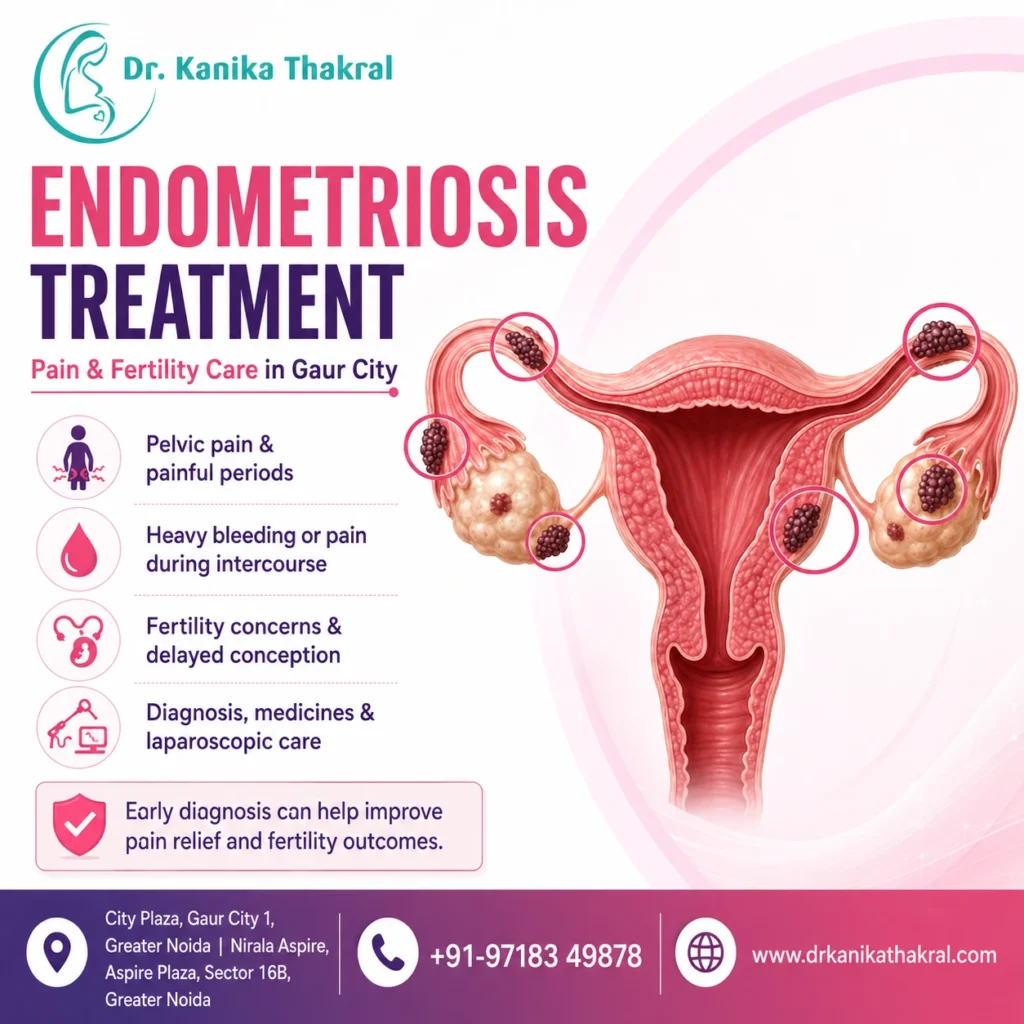
Endometriosis Treatment in Gaur City – Pain & Fertility Care
Endometriosis Treatment is important for women who suffer from severe period pain, pelvic pain, painful intercourse, heavy periods, or difficulty getting pregnant. Many women ignore these symptoms for years because they think period pain is normal.
Mild cramps during periods can happen. However, pain that affects daily life, work, sleep, or routine activity should not be ignored. It may be linked with endometriosis or another gynecology concern.
Dr. Kanika Thakral provides guidance for Endometriosis Treatment in Gaur City, Endometriosis symptoms, Severe period pain, Pelvic pain in women, and women’s reproductive health support.
What Is Endometriosis?
Endometriosis is a condition where tissue similar to the lining of the uterus grows outside the uterus. This tissue may be found near the ovaries, fallopian tubes, pelvic lining, bowel, bladder, or other nearby areas.
During the menstrual cycle, this tissue may react to hormone changes. As a result, it can cause inflammation, pain, swelling, and scar tissue in some women.
The condition may be mild, moderate, or severe. However, pain level does not always match the stage. Some women with mild disease may have severe pain, while others may have fewer symptoms.
Why Endometriosis Should Not Be Ignored
Endometriosis can affect daily comfort, emotional wellbeing, periods, fertility, and quality of life. Some women miss school, work, or family events because of pain.
It can also delay pregnancy planning in some cases. Therefore, early evaluation is useful, especially if pain is increasing or pregnancy is not happening.
Ignoring symptoms may delay diagnosis. Timely care can help reduce pain and support better long-term planning.
Endometriosis Symptoms
Endometriosis symptoms can vary from woman to woman. Some women may have strong symptoms, while others may have mild or hidden signs.
Common symptoms include:
- Severe period pain
- Pelvic pain before or during periods
- Pain during or after intercourse
- Heavy bleeding
- Bleeding between periods
- Pain while passing stool during periods
- Pain while passing urine during periods
- Bloating
- Fatigue
- Lower back pain
- Difficulty getting pregnant
These symptoms may overlap with other conditions. So, proper evaluation is important.
Severe Period Pain
Severe period pain is one of the most common warning signs. If pain starts before periods, continues during periods, or becomes worse over time, it should be checked.
Pain that needs repeated painkillers, causes vomiting, affects work, or stops routine life is not something to normalize.
Many women are told that period pain is common. However, severe pain needs proper diagnosis.
Pelvic Pain in Women
Pelvic pain in women may happen due to many reasons. Endometriosis is one possible cause, but it is not the only one.
Pelvic pain may also be linked with ovarian cysts, fibroids, pelvic infection, urinary issues, bowel problems, adhesions, or hormonal concerns.
The pattern of pain matters. Pain linked with periods, intercourse, urination, bowel movement, or fertility issues should be discussed with Dr. Kanika Thakral.
Pain During Intercourse
Pain during or after intercourse can be a symptom of endometriosis. It may happen because of inflammation, deep pelvic tenderness, scar tissue, or lesions near sensitive areas.
Many women feel shy discussing this symptom. However, it is important because it can affect relationships, confidence, and emotional health.
Open discussion helps in better diagnosis and treatment planning.
Heavy or Irregular Periods
Some women with endometriosis may have heavy periods or spotting between periods. Others may have cycle-related pain without major bleeding changes.
Irregular Periods Treatment is important when periods become unpredictable, very heavy, painful, or prolonged. The cause may be endometriosis, hormonal imbalance, fibroids, PCOS, thyroid issues, or other concerns.
A proper checkup helps identify the real reason.
Endometriosis and Fertility
Endometriosis may affect fertility in some women. It can cause inflammation, affect egg quality, disturb tube function, or create scar tissue around reproductive organs.
However, many women with endometriosis can still conceive. Fertility depends on age, ovarian reserve, tube health, sperm health, disease severity, and overall reproductive health.
If pregnancy is not happening after trying, timely evaluation is helpful.
Can Endometriosis Affect Pregnancy?
Many women with endometriosis have healthy pregnancies. However, pregnancy planning may need extra attention if there is severe disease, previous surgery, ovarian cysts, repeated pain, or infertility history.
Once pregnancy happens, routine Pregnancy Care is important. Your doctor may monitor symptoms, early pregnancy progress, and overall maternal health.
Endometriosis itself does not automatically decide delivery method. Delivery planning depends on the current pregnancy condition.
Safe Delivery After Endometriosis
Safe Delivery is possible for many women with a history of endometriosis. The delivery plan depends on baby position, placenta, mother’s health, previous surgery, pregnancy progress, and labor condition.
Some women may have Normal Delivery if pregnancy remains healthy and there are no delivery-related concerns.
The focus should always be mother and baby safety, not only the mode of birth.
Causes of Endometriosis
The exact cause of endometriosis is not fully clear. It may be linked with menstrual flow changes, immune response, genetic tendency, hormone influence, or tissue changes.
Risk may be higher in women with early periods, heavy periods, shorter cycles, family history, or delayed pregnancy. However, it can happen even without obvious risk factors.
This is why symptoms matter more than assumptions.
How Is Endometriosis Diagnosed?
Diagnosis starts with a detailed history. Dr. Kanika Thakral may ask about period pain, pelvic pain, bleeding pattern, pain during intercourse, bowel symptoms, urinary symptoms, and pregnancy planning.
Tests may include:
- Pelvic examination
- Ultrasound
- MRI in selected cases
- Blood tests when needed
- Laparoscopy in selected cases
Ultrasound can help detect ovarian endometriotic cysts, also called chocolate cysts. However, small endometriosis spots may not always be seen on ultrasound.
Is Laparoscopy Always Needed?
Laparoscopy may help confirm diagnosis and treat endometriosis in selected cases. However, it is not needed for every woman at the first visit.
The decision depends on symptoms, scan findings, age, fertility goals, severity, previous treatment response, and overall health.
Some women may first start medical treatment and monitoring. Others may need surgical evaluation if symptoms are severe or fertility is affected.
Endometriosis Treatment Options
Endometriosis Treatment depends on symptoms, age, fertility plans, pain severity, scan findings, and overall health.
Treatment may include:
- Pain relief medicines
- Hormonal medicines
- Cycle control medicines
- Lifestyle support
- Treatment for heavy bleeding
- Fertility evaluation
- Surgery in selected cases
- Long-term follow-up
No single plan works for every woman. Treatment should be personalized.
Pain Management
Pain management is often the first concern. Medicines may help reduce pain and inflammation. However, repeated painkiller use without diagnosis is not the right approach.
If pain happens every cycle or is worsening, evaluation is needed. Your treatment plan may include medicines, hormonal support, heat therapy, diet changes, exercise guidance, or further testing.
The goal is to reduce pain and improve daily comfort.
Hormonal Treatment
Hormonal treatment may help reduce symptoms in women who are not planning pregnancy immediately. It may reduce menstrual flow, suppress painful cycle changes, and control symptoms.
However, hormone medicines should not be started without guidance. They may not be suitable for every woman.
The right option depends on medical history, fertility plans, age, weight, migraine history, blood pressure, and other health factors.
Surgery for Endometriosis
Surgery may be considered if pain is severe, medicines are not helping, ovarian cyst is present, fertility is affected, or endometriosis is advanced.
Surgery may remove endometriotic lesions, cysts, or scar tissue in selected cases. However, surgery decisions should be made carefully, especially if fertility is a concern.
Dr. Kanika Thakral can guide whether medical treatment, monitoring, or surgery evaluation is suitable.
Endometriosis and Ovarian Cysts
Endometriosis can sometimes cause ovarian cysts called endometriomas or chocolate cysts. These cysts may cause pain, heavy periods, or fertility concerns.
Not every ovarian cyst is endometriosis. Some cysts are functional and may go away. Others need monitoring or treatment.
Ultrasound helps understand cyst type, size, and follow-up needs.
Endometriosis and Fibroids
Fibroids and endometriosis are different conditions. However, both can cause pelvic pain, heavy bleeding, or fertility concerns.
Sometimes, both may be present together. In such cases, treatment planning should consider all findings, not just one condition.
A complete evaluation helps avoid missing the real cause of pain or bleeding.
Lifestyle Tips for Endometriosis
Lifestyle changes cannot cure endometriosis, but they may support symptom control and overall health.
Helpful tips include:
- Track periods and pain days.
- Use heat therapy for cramps.
- Eat balanced meals.
- Stay physically active.
- Manage stress.
- Sleep well.
- Avoid smoking.
- Stay hydrated.
- Do not ignore worsening pain.
- Follow up regularly.
These steps may improve comfort when combined with proper care.
Diet and Endometriosis
No single diet cures endometriosis. However, some women feel better with anti-inflammatory food habits.
A balanced diet may include fruits, vegetables, whole grains, protein, nuts, seeds, and enough water. Reducing excess sugar, fried food, and highly processed foods may help overall health.
Diet should support energy, weight balance, digestion, and hormonal health.
When Should You See Dr. Kanika Thakral?
You should seek guidance if period pain is severe, pelvic pain is recurring, or pain affects daily life.
Consult Dr. Kanika Thakral if you have:
- Severe period pain
- Pelvic pain during periods
- Pain during intercourse
- Heavy periods
- Bleeding between periods
- Pain while passing urine or stool during periods
- Bloating with periods
- Difficulty getting pregnant
- Ovarian cyst on ultrasound
- Pain not improving with basic medicines
Early evaluation can help reduce pain and protect reproductive health.
Why Choose Dr. Kanika Thakral?
Dr. Kanika Thakral provides caring guidance for Endometriosis Treatment in Gaur City, Endometriosis symptoms, Severe period pain, Pelvic pain in women, and reproductive health concerns.
Women can also consult Dr. Kanika Thakral for Irregular Periods Treatment, Pregnancy Care, fertility-related concerns, safe delivery planning, and complete women’s health support.
If you are dealing with painful periods or pelvic pain, timely consultation can help you understand the cause and choose the right care plan.
Final Thoughts
Endometriosis Treatment can help women manage severe period pain, pelvic pain, heavy bleeding, painful intercourse, and fertility concerns. The condition can affect daily life, but proper diagnosis and personalized care can make a major difference.
Do not ignore pain that affects your routine. Period pain that is severe, worsening, or linked with fertility concerns should be evaluated.
For Endometriosis Treatment in Gaur City, Endometriosis symptoms, Severe period pain, Pelvic pain in women, and Irregular Periods Treatment, consult Dr. Kanika Thakral.
FAQs
1. What is endometriosis?
Endometriosis is a condition where tissue similar to the uterine lining grows outside the uterus and may cause pain, inflammation, and fertility concerns.
2. What are common Endometriosis symptoms?
Common symptoms include severe period pain, pelvic pain, painful intercourse, heavy bleeding, bowel or urinary pain during periods, fatigue, and difficulty getting pregnant.
3. Is severe period pain normal?
Mild cramps can happen, but severe period pain that affects daily life should not be ignored.
4. Can endometriosis cause pelvic pain in women?
Yes. Endometriosis is one possible cause of pelvic pain in women, especially when pain worsens during periods.
5. Can endometriosis affect pregnancy?
It may affect fertility in some women, but many women with endometriosis can conceive and have healthy pregnancies.
6. What is the treatment for endometriosis?
Treatment may include pain relief, hormonal medicines, lifestyle support, fertility care, or surgery in selected cases.
