
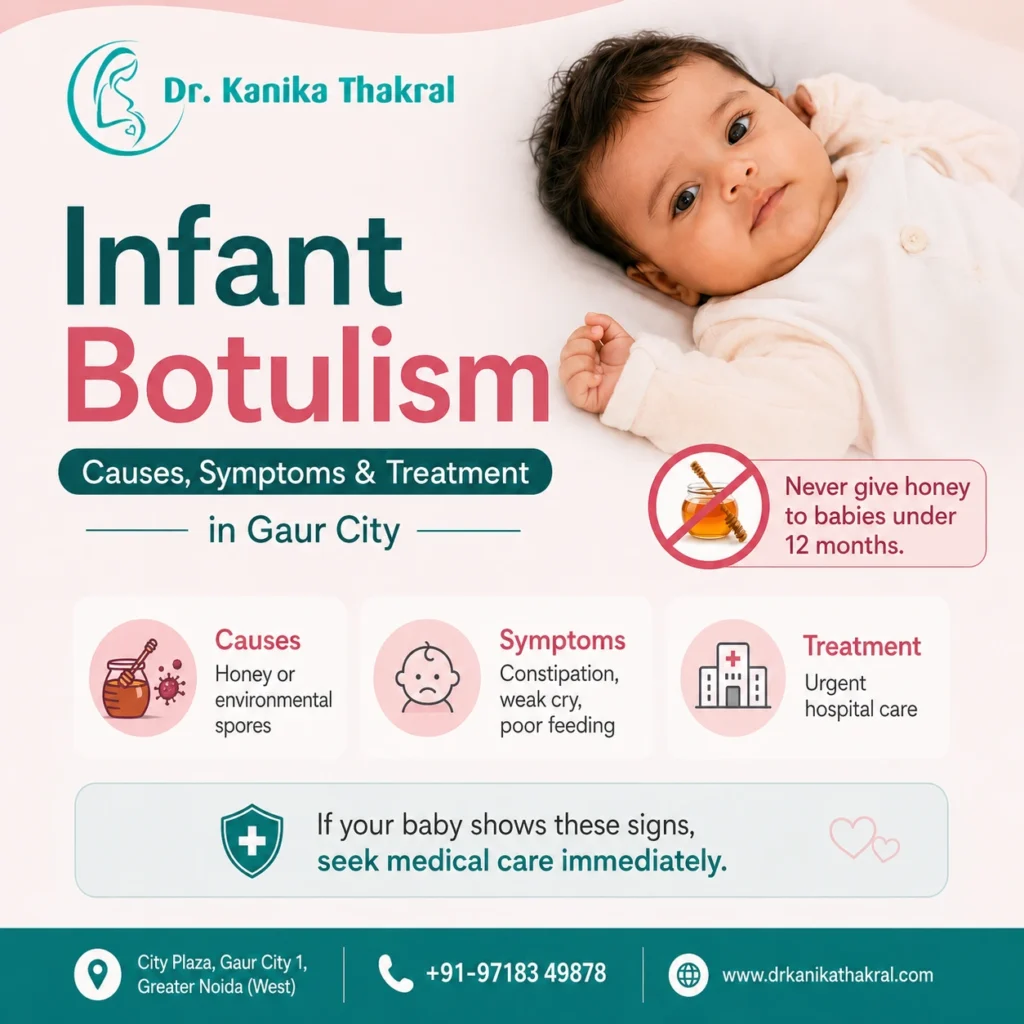
Infant Botulism: Causes, Symptoms & Treatment in Gaur City
Infant Botulism is a rare but serious illness that can affect babies, especially those below 12 months of age. It happens when a baby swallows spores of a bacteria called Clostridium botulinum. These spores can grow inside the baby’s intestines and produce a toxin that affects the nerves and muscles.
For parents, this condition can be worrying because early symptoms may look simple at first. A baby may have constipation, poor feeding, weak crying, or unusual tiredness. However, symptoms can slowly become serious if treatment is delayed.
Dr. Kanika Thakral provides caring guidance for pregnancy, post-delivery care, newborn safety awareness, Pregnancy Care, Safe Delivery, and women’s health support in Gaur City. For any suspected infant emergency, parents should seek urgent pediatric or hospital care without delay.
What Is Infant Botulism?
Infant botulism is a serious condition in which a toxin affects a baby’s nervous system. This toxin can make the baby’s muscles weak. As a result, the baby may look floppy, feed poorly, cry weakly, or have trouble breathing.
This condition is different from normal constipation or common newborn tiredness. It needs medical attention because babies can become weak very quickly. Early diagnosis and hospital-based treatment can help improve recovery.
Parents should remember one important point. Any baby who suddenly becomes weak, sleepy, floppy, or unable to feed properly should be checked by a doctor as soon as possible.
Why Babies Are More at Risk
Babies below 12 months have an immature digestive system. Their gut is still developing, so harmful spores may grow more easily inside the intestines. This is why infants are more vulnerable than older children and adults.
In older children and adults, the gut is more developed. It can usually stop these spores from growing. However, in infants, the spores may multiply and release toxin inside the body.
Therefore, parents need to be careful with a baby’s food, surroundings, and hygiene. Prevention is especially important during the first year of life.
Common Causes of Infant Botulism
Infant botulism happens when a baby swallows botulinum spores. These spores may be present in some natural environments. They can also be found in honey, which is why honey is not safe for babies under 12 months.
Common possible sources include:
- Honey or food containing honey
- Dust or soil exposure
- Contaminated surfaces
- Unsafe feeding practices
- Poor hygiene around baby items
- Rare environmental exposure
In many cases, the exact source may not be found. Still, avoiding honey before one year is one of the most important prevention steps.
Why Honey Is Unsafe Before 12 Months
Honey may look natural and healthy, but it is not safe for babies below one year. It can contain botulinum spores. If these spores grow in the baby’s intestines, they can produce toxin and cause infant botulism.
Parents should avoid all forms of honey for infants under 12 months. This includes raw honey, processed honey, honey water, honey on pacifiers, honey in homemade remedies, and food items that contain honey.
After the baby completes 12 months, the digestive system becomes more mature. Still, before that age, honey should be completely avoided.
Symptoms Parents Should Watch For
Early symptoms can be mild. However, they may progress over time. Parents should observe any sudden change in feeding, movement, crying, or alertness.
Common symptoms include:
- Constipation
- Poor feeding
- Weak sucking
- Weak cry
- Drooping eyelids
- Sleepiness
- Poor head control
- Floppy body
- Reduced facial expression
- Trouble swallowing
- Breathing difficulty
Constipation is often one of the first symptoms. However, constipation alone does not always mean botulism. The concern becomes stronger when constipation is combined with weakness, poor feeding, or a floppy body.
Warning Signs That Need Urgent Care
Infant botulism can affect breathing muscles in severe cases. Therefore, parents should not wait if the baby looks weak or is feeding poorly. Urgent care is needed if symptoms are getting worse.
Seek immediate medical help if your baby has:
- Difficulty breathing
- Very weak cry
- Poor feeding
- Unable to suck properly
- Floppy arms or legs
- Drooping eyelids
- Extreme sleepiness
- Repeated choking
- Weak movement
- Bluish lips or face
These signs can be serious. Do not try home remedies in such cases. Go to a hospital or contact emergency care immediately.
How Infant Botulism Is Diagnosed
Diagnosis starts with a careful medical examination. The doctor may ask about feeding, constipation, honey exposure, dust exposure, and changes in the baby’s behavior. The baby’s muscle strength, cry, suck reflex, and breathing may also be checked.
In some cases, lab tests may be done to confirm the diagnosis. However, doctors may begin supportive care if symptoms are concerning. This is because waiting too long can be risky.
Parents should share every detail honestly. Even small information, such as honey use or sudden feeding changes, can help the doctor.
Treatment for Infant Botulism
Treatment is usually done in a hospital. The baby may need close monitoring because breathing and feeding can be affected. Doctors may also give specific treatment such as botulism immune globulin, depending on availability and diagnosis.
Supportive care may include help with feeding, hydration, breathing support, and monitoring. Some babies may need a longer hospital stay because muscle recovery can take time.
The good news is that many babies recover well with timely treatment. However, early care is very important.
What Parents Should Not Do
Parents often try home remedies when a baby has constipation or feeding trouble. However, this can be dangerous if the baby has a serious condition. Do not delay medical care if the baby looks weak or unusually sleepy.
Avoid these mistakes:
- Do not give honey to babies under 12 months.
- Do not give herbal mixtures without medical advice.
- Do not ignore weak sucking.
- Do not delay care if the baby becomes floppy.
- Do not give adult medicines.
- Do not force-feed a weak baby.
- Do not treat breathing difficulty at home.
If symptoms are unusual, medical evaluation is the safest step.
Prevention Tips for Parents
Prevention is very important, especially in the first year of life. A few simple steps can reduce risk and protect your baby.
Follow these tips:
- Avoid honey before 12 months.
- Do not put honey on pacifiers.
- Avoid honey-based home remedies.
- Keep baby feeding items clean.
- Wash hands before feeding.
- Keep the baby away from dusty areas.
- Clean floors and surfaces regularly.
- Store baby food safely.
- Follow safe feeding advice.
- Visit the doctor for unusual symptoms.
These steps are simple, but they can make a big difference.
Infant Botulism and Newborn Care
Newborn care does not end after delivery. Parents need guidance on feeding, hygiene, sleep safety, and warning signs. This is especially important during the first few months.
After Normal Delivery or C-section, mothers may feel tired and overwhelmed. During this time, family members should help with baby care and watch for unusual symptoms. A calm and informed family can respond faster if the baby needs medical attention.
Dr. Kanika Thakral supports mothers with post-delivery guidance, Pregnancy Care, and newborn safety awareness. However, if the baby shows emergency symptoms, urgent pediatric care is necessary.
Link With Pregnancy and Delivery Care
Infant botulism is not caused by the delivery method. It can happen after birth if the baby is exposed to spores. Still, good pregnancy and postnatal counselling help parents learn safe newborn care practices.
Good Safe Delivery planning includes care for both mother and baby. It also includes post-delivery instructions, feeding advice, hygiene awareness, and follow-up visits. These steps help parents feel more confident after birth.
A mother who receives proper pregnancy and postnatal guidance is more likely to notice warning signs early. Therefore, awareness matters.
When Should New Parents Ask for Help?
New parents should ask for help whenever they feel something is not right. Babies cannot explain discomfort, so small changes matter. Poor feeding, weak crying, and unusual sleepiness should not be ignored.
Consult a doctor if your baby has:
- No stool for several days with weakness
- Poor feeding
- Weak cry
- Less movement
- Droopy eyelids
- Poor head control
- Breathing changes
- Unusual tiredness
Even if the cause is not serious, a checkup can give peace of mind.
Role of Women’s Health Care After Delivery
After delivery, the mother’s health is also important. Mothers may need support for weakness, bleeding, wound care, breastfeeding, emotional changes, and menstrual health. This is where postnatal follow-up becomes useful.
At Dr. Kanika Thakral’s Women Clinic in Gaur City, mothers can get guidance for post-delivery recovery, contraception advice, cycle changes, and Irregular Periods Treatment when needed later. Good maternal care supports better baby care too.
A healthy and supported mother can observe the baby better and seek help faster when needed.
Why Choose Dr. Kanika Thakral?
Dr. Kanika Thakral provides caring support for pregnancy, delivery planning, postnatal care, and women’s health concerns. Parents can consult her for pregnancy guidance, Safe Delivery, Normal Delivery, post-delivery recovery, and newborn safety awareness.
If you are looking for the Best Gynecologist in Gaur City, Dr. Kanika Thakral offers patient-friendly care with clear guidance. Her approach helps mothers understand pregnancy, delivery, and postnatal care in a simple way.
For infant illness symptoms, parents should also contact a pediatrician or emergency hospital care immediately.
Final Thoughts
Infant Botulism is rare, but it can be serious. Parents should know the early signs, such as constipation, poor feeding, weak cry, floppy body, and unusual sleepiness. The most important prevention step is to avoid honey in any form before 12 months of age.
Do not wait if your baby shows weakness or breathing trouble. Early medical care can protect the baby and support recovery.
For pregnancy, post-delivery care, newborn safety awareness, Pregnancy Care, Safe Delivery, and women’s health guidance in Gaur City, consult Dr. Kanika Thakral. Timely awareness can help parents make safer choices for their baby.
FAQs
1. What is infant botulism?
Infant botulism is a serious illness that happens when botulinum spores grow inside a baby’s intestines and produce toxin. It can cause muscle weakness and feeding problems.
2. What are the first signs of infant botulism?
Early signs may include constipation, poor feeding, weak sucking, weak crying, sleepiness, and reduced movement.
3. Why should babies not have honey?
Honey may contain botulinum spores. These spores can grow in a baby’s intestines and cause infant botulism. Babies under 12 months should not be given honey.
4. Can infant botulism be treated?
Yes, treatment is available. Babies usually need hospital care, monitoring, supportive care, and specific treatment when advised by doctors.
5. Is infant botulism caused by Normal Delivery?
No. Infant botulism is not caused by Normal Delivery. It usually happens when a baby swallows botulinum spores after birth.
6. When should I take my baby to the doctor?
Take your baby to a doctor urgently if there is poor feeding, weak cry, floppy body, drooping eyelids, breathing difficulty, or unusual sleepiness.
