
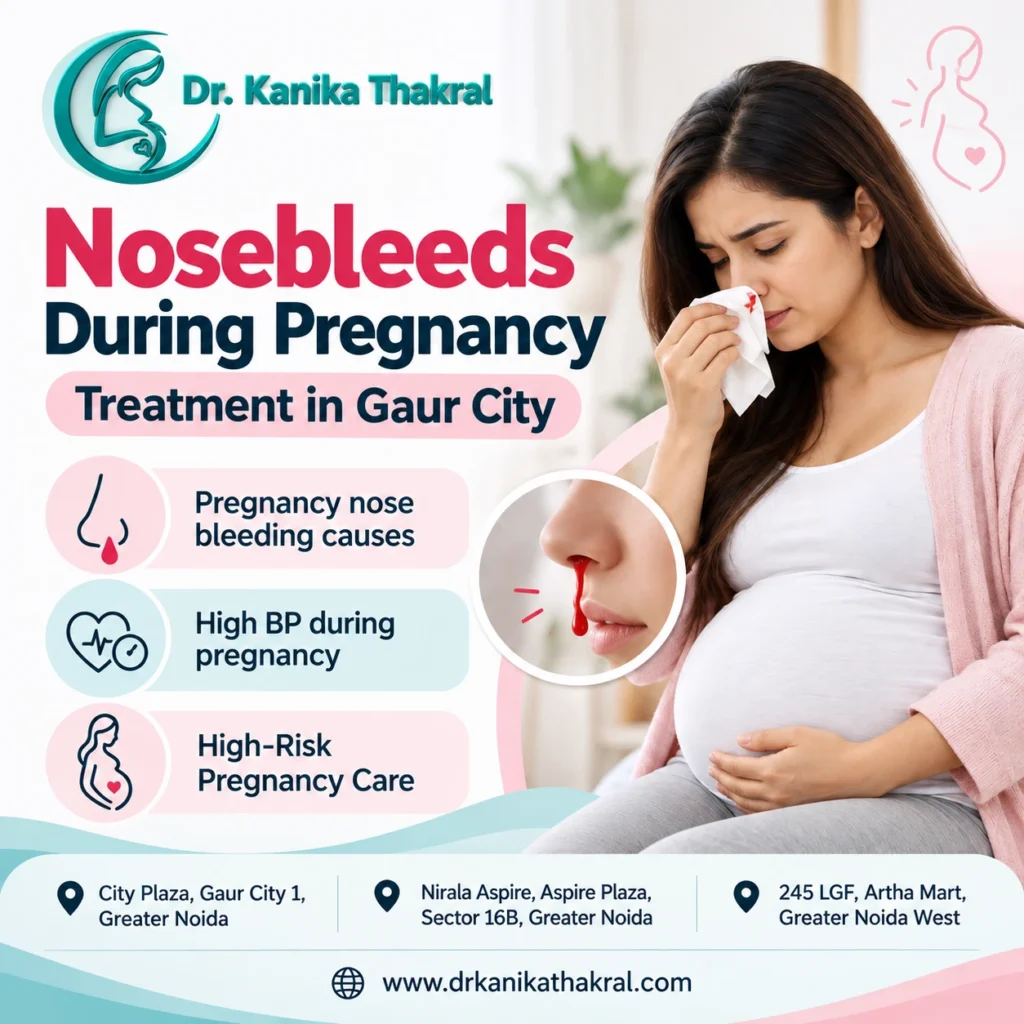
Nosebleeds During Pregnancy Treatment in Gaur City
Nosebleeds during pregnancy can happen because pregnancy hormones increase blood flow and make the small blood vessels inside the nose more sensitive. Dry air, allergies, frequent nose blowing, or nasal irritation can also increase the chance of bleeding.
In many cases, a mild nosebleed is not serious. However, repeated or heavy bleeding should not be ignored, especially if it comes with severe headache, blurred vision, swelling, dizziness, or very high blood pressure.
Therefore, proper Pregnancy Treatment in Gaur City can help identify whether the bleeding is due to common pregnancy changes or another health concern.
Why Do Nosebleeds Happen During Pregnancy?
There are several Pregnancy nose bleeding causes. During pregnancy, blood volume increases and hormonal changes can make nasal blood vessels more fragile.
Common causes include:
- Increased blood flow during pregnancy
- Hormonal changes
- Dry air
- Nasal dryness
- Allergies
- Frequent sneezing
- Nose picking or rubbing
- Strong nose blowing
- Cold or sinus irritation
- Nasal sprays in some cases
- High blood pressure in selected cases
Because the cause can vary, repeated nosebleeds should be discussed during pregnancy checkups.
Are Nosebleeds During Pregnancy Normal?
Mild and occasional nosebleeds can happen during pregnancy. They are often caused by dry nasal passages and increased blood flow.
Still, you should pay attention if bleeding:
- Happens frequently
- Is difficult to stop
- Is very heavy
- Comes with dizziness
- Happens with severe headache
- Is associated with blurred vision
- Comes with swelling of the face or hands
- Happens along with high blood pressure
In such cases, medical evaluation is important.
Pregnancy Nose Bleeding Causes
Understanding Pregnancy nose bleeding causes can help decide whether simple care is enough or further evaluation is needed.
Possible causes include:
- Dry nasal lining
- Hormonal changes
- Increased blood volume
- Nasal allergy
- Cold or infection
- Minor injury inside the nose
- Dehydration
- Very dry indoor air
- High BP during pregnancy
- Blood clotting problems in rare cases
Most nosebleeds are mild, but persistent symptoms need proper assessment.
High BP During Pregnancy and Nosebleeds
High BP during pregnancy does not always cause a nosebleed, and nosebleeds alone cannot confirm high blood pressure. However, high blood pressure during pregnancy can be serious and may come with other warning signs.
Watch for:
- Severe headache
- Blurred vision
- Swelling of face or hands
- Upper abdominal pain
- Sudden weight gain
- Breathlessness
- Dizziness
- Reduced baby movements in later pregnancy
If nosebleeds are happening along with these symptoms, blood pressure should be checked promptly.
What to Do During a Nosebleed
If a nosebleed starts, stay calm and sit upright.
You can:
- Lean slightly forward
- Pinch the soft part of the nose
- Keep steady pressure for about 10–15 minutes
- Breathe through the mouth
- Use a cold compress over the nose
- Avoid lying flat
- Avoid tilting the head backward
After bleeding stops, avoid hard nose blowing or picking for some time.
What You Should Avoid
During a nosebleed, avoid:
- Tilting the head backward
- Swallowing blood
- Blowing the nose forcefully
- Picking the nose
- Using nasal medicines without advice
- Ignoring repeated heavy bleeding
- Delaying BP check if warning signs are present
Simple care may be enough for mild bleeding, but repeated episodes need evaluation.
When Nosebleeds Need Medical Attention
Seek medical help if:
- Bleeding does not stop after 15–20 minutes of firm pressure
- Bleeding is very heavy
- You feel faint or weak
- Nosebleeds happen frequently
- You have very high blood pressure
- You have severe headache or blurred vision
- You have breathing difficulty
- You are taking blood-thinning medicines
- You have a known bleeding disorder
Timely care can help rule out more serious causes.
High-Risk Pregnancy Care
High-Risk Pregnancy Care may be needed if nosebleeds happen along with high blood pressure, severe anemia, clotting problems, or other pregnancy complications.
Closer monitoring may include:
- Blood pressure checks
- Urine testing
- Blood tests
- Hemoglobin testing
- Platelet count when needed
- Liver and kidney tests in selected cases
- Baby growth monitoring
- Fetal movement guidance
If high blood pressure is confirmed, regular follow-up becomes especially important.
Pregnancy Treatment in Gaur City
Proper Pregnancy Treatment in Gaur City can help monitor blood pressure, maternal health, and baby well-being when nosebleeds are repeated or associated with warning signs.
Your doctor may review:
- Frequency of nosebleeds
- Amount of bleeding
- Blood pressure
- Headache or vision symptoms
- Swelling
- Medicines
- Previous pregnancy history
- Blood test reports
Based on the findings, further tests or treatment may be advised.
How to Reduce Nosebleeds During Pregnancy
Some simple steps may help reduce nasal dryness and irritation.
Helpful measures include:
- Drink enough water
- Use a humidifier in dry weather
- Avoid nose picking
- Blow the nose gently
- Avoid very dry air
- Use saline nasal spray if advised
- Apply pregnancy-safe nasal moisturization if recommended
- Manage allergies under medical guidance
These steps may reduce mild nosebleeds caused by dryness.
When to Consult Dr. Kanika Thakral
Consult Dr. Kanika Thakral if you have repeated nosebleeds, heavy bleeding, dizziness, high blood pressure symptoms, severe headache, blurred vision, swelling, or other pregnancy concerns.
You may need care for:
- Nosebleeds during pregnancy
- Pregnancy nose bleeding causes
- High BP during pregnancy
- High-Risk Pregnancy Care
- Pregnancy Treatment in Gaur City
Timely evaluation can help identify the cause and guide safe pregnancy care.
FAQs
1. Are nosebleeds common during pregnancy?
Yes, mild nosebleeds can happen because pregnancy increases blood flow and makes nasal blood vessels more sensitive.
2. What are common pregnancy nose bleeding causes?
Common causes include hormonal changes, increased blood volume, dry air, allergies, frequent nose blowing, and nasal irritation.
3. Can high BP during pregnancy cause nosebleeds?
High blood pressure is not always the cause of nosebleeds. However, repeated nosebleeds with severe headache, blurred vision, or swelling need prompt blood pressure evaluation.
4. What should I do if my nose starts bleeding?
Sit upright, lean slightly forward, and pinch the soft part of the nose for 10–15 minutes. Seek medical help if bleeding does not stop.
5. When is High-Risk Pregnancy Care needed?
High-Risk Pregnancy Care may be needed if nosebleeds are linked with high blood pressure, severe anemia, clotting problems, or other pregnancy complications.
6. When should I seek pregnancy treatment?
Seek Pregnancy Treatment in Gaur City if nosebleeds are frequent, heavy, difficult to stop, or come with severe headache, blurred vision, swelling, weakness, or dizziness.
