
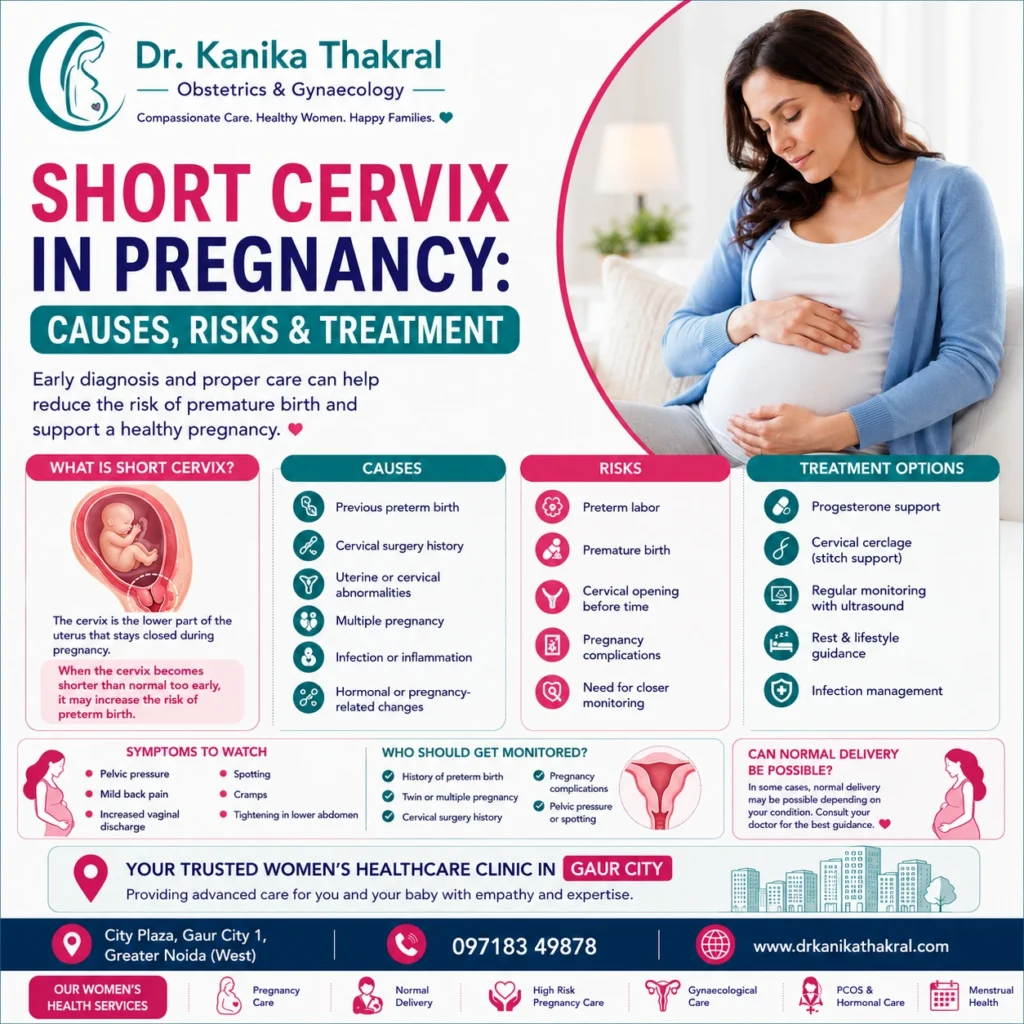
Short Cervix in Pregnancy: Causes, Risks & Treatment
Pregnancy needs regular monitoring to keep both mother and baby safe. One important condition that may need extra attention is Short Cervix in Pregnancy. The cervix is the lower part of the uterus that stays closed during pregnancy and opens during delivery. When the cervix becomes shorter than expected too early, it may increase the risk of premature delivery.
A short cervix does not always mean there will be complications, but it should be monitored carefully. With timely diagnosis, proper treatment, and regular Pregnancy Care, many women can continue their pregnancy safely.
What is Short Cervix in Pregnancy?
A short cervix means the cervix length is shorter than normal during pregnancy. Usually, doctors check cervical length through ultrasound, especially in women who may have a higher risk of preterm birth.
The cervix should remain firm and closed until labor begins. If it starts shortening early, it may not support the pregnancy properly.
Why Cervical Length Matters in Short Cervix in Pregnancy
Cervical length helps doctors understand the risk of early labor. A shorter cervix may increase pressure on the uterus and may lead to early opening of the cervix.
This is why regular checkups with an experienced Gynecologist in Gaur City are important during pregnancy.
Causes of Short Cervix in Pregnancy
Short Cervix in Pregnancy may happen due to different reasons, such as:
Previous Preterm Birth
Women with a history of premature delivery may have a higher risk.
Cervical Surgery History
Previous procedures on the cervix may affect cervical strength.
Uterine or Cervical Abnormalities
Some women may naturally have a weaker or shorter cervix.
Multiple Pregnancy
Twin or multiple pregnancies can put extra pressure on the cervix.
Infection or Inflammation
Certain infections may increase pregnancy complications.
Hormonal or Pregnancy-Related Changes
Pregnancy changes may sometimes affect cervical length and strength.
Signs and Symptoms of Short Cervix
Many women do not feel any clear symptoms. That is why ultrasound monitoring is very important.
Possible warning signs may include:
- Pelvic pressure
- Mild back pain
- Increased vaginal discharge
- Spotting
- Cramps
- Tightening in lower abdomen
If you notice any unusual symptoms, consult your doctor immediately.
Risks of Short Cervix in Pregnancy
A short cervix may increase the risk of:
- Preterm labor
- Premature birth
- Cervical opening before time
- Pregnancy complications
- Need for closer monitoring
Early diagnosis can help reduce these risks.
How is Short Cervix Diagnosed?
Doctors usually diagnose short cervix through a transvaginal ultrasound. This scan helps measure cervical length accurately.
Your doctor may recommend cervical length monitoring if you have:
- Previous premature delivery
- Twin pregnancy
- Cervical surgery history
- Pregnancy complications
- Pelvic pressure or spotting
Treatment Options for Short Cervix
Treatment depends on cervical length, pregnancy weeks, symptoms, and medical history.
Progesterone Support
Progesterone may be advised in some cases to reduce the risk of preterm birth.
Cervical Cerclage
Cerclage is a stitch placed around the cervix to help keep it closed. It may be recommended for women at higher risk.
Regular Monitoring
Frequent ultrasound scans may be needed to track cervical length.
Rest and Lifestyle Guidance
Your doctor may suggest avoiding heavy physical activity and taking proper rest.
Infection Management
If infection is present, proper treatment may be needed.
Can Normal Delivery Be Possible?
In some cases, Normal Delivery may still be possible depending on the pregnancy condition, cervical status, baby’s health, and doctor’s advice.
However, delivery planning should always be done under expert medical supervision.
Importance of Safe Pregnancy Care
A short cervix needs careful monitoring to support a safer pregnancy journey. Regular Obstetrics & Gynecology care helps detect problems early and plan the right treatment.
Women should not ignore symptoms like pressure, spotting, cramps, or unusual discharge.
Why Choose Dr. Kanika Thakral?
Dr. Kanika Thakral provides compassionate pregnancy care and women’s healthcare support in Gaur City.
Services include:
✔ Pregnancy Care
✔ Safe Delivery Guidance
✔ Normal Delivery Consultation
✔ High-Risk Pregnancy Monitoring
✔ Irregular Periods Treatment
✔ Women’s Health Consultation
✔ Obstetrics & Gynecology Care
If you are searching for a Best Gynecologist in Gaur City or trusted Women Clinic in Gaur City, consult Dr. Kanika Thakral for expert care.
FAQs
1. What is Short Cervix in Pregnancy?
It means the cervix is shorter than expected during pregnancy and may need monitoring.
2. Is short cervix dangerous?
It may increase the risk of preterm birth, but timely treatment can help manage the risk.
3. How is short cervix detected?
It is usually detected through transvaginal ultrasound.
4. Can short cervix be treated?
Yes, treatment may include progesterone, cervical cerclage, monitoring, and rest guidance.
5. Can I have normal delivery with short cervix?
It depends on your pregnancy condition and doctor’s advice.
6. When should I consult a doctor?
Consult immediately if you notice pelvic pressure, spotting, cramps, or unusual discharge.
7. Where can I get pregnancy care in Gaur City?
Consult Dr. Kanika Thakral for pregnancy care and gynecology support in Gaur City.
