
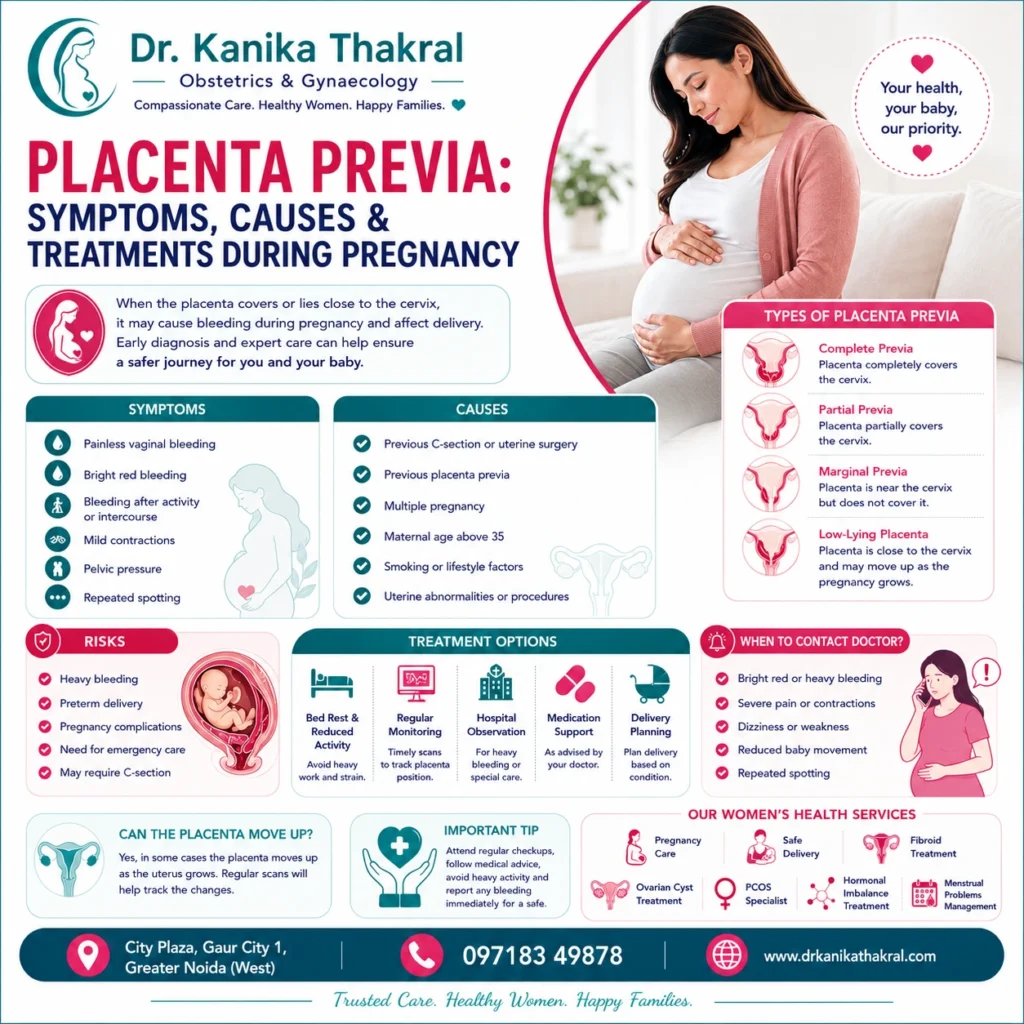
Placenta Previa: Symptoms, Causes & Treatments
Pregnancy needs regular monitoring to keep both mother and baby safe. One condition that may require extra attention is Placenta Previa. It happens when the placenta lies unusually low in the uterus and partially or completely covers the cervix. The cervix is the opening through which the baby usually passes during birth.
This pregnancy condition can cause bleeding, especially in the second or third trimester. The most common symptom is painless bright red vaginal bleeding after 20 weeks of pregnancy. Diagnosis is usually done through ultrasound, and treatment depends on bleeding, pregnancy stage, placenta position, and the health of mother and baby.
At Dr. Kanika Thakral’s clinic, pregnant women receive careful monitoring, compassionate guidance, and personalized pregnancy care for high-risk pregnancy concerns.
What is Placenta Previa?
Placenta Previa is a pregnancy complication in which the placenta attaches low in the uterus and covers or lies close to the cervical opening. Normally, the placenta is positioned higher in the uterus, away from the cervix.
The placenta is important because it provides oxygen and nutrients to the baby. When it is placed too low, it may create problems during pregnancy or delivery. Some low-lying placentas move upward as the uterus grows, but regular monitoring is necessary to confirm whether the condition improves.
Types of Low-Lying Placenta
Doctors may describe this condition based on how close the placenta is to the cervix.
Complete Coverage
The placenta completely covers the cervical opening. This usually needs very careful monitoring and planned delivery.
Partial Coverage
The placenta covers part of the cervix. The doctor will monitor the condition through ultrasound.
Marginal Position
The placenta reaches the edge of the cervix but does not fully cover it.
Low-Lying Placenta
The placenta is close to the cervix but may move upward as pregnancy progresses.
Symptoms of This Pregnancy Condition
The most common sign is painless vaginal bleeding in the second half of pregnancy. Some women may also experience bleeding after sex, a medical examination, or contractions. In some cases, there may be no symptoms, and the condition is found during a routine ultrasound.
Possible symptoms include:
- Bright red bleeding
- Painless bleeding
- Bleeding after physical activity
- Mild contractions
- Pelvic pressure
- Repeated spotting
Any bleeding during pregnancy should be discussed with a doctor immediately.
Causes of Low Placental Position
The exact cause is not always known. However, some factors may increase the chance of developing this condition.
Previous Cesarean Delivery
Women with previous uterine surgery or C-section history may have a higher risk.
Previous Placental Complication
A history of this condition in an earlier pregnancy may increase risk.
Multiple Pregnancy
Twin or multiple pregnancy can increase pressure on the uterus and may affect placental position.
Maternal Age
Pregnancy after 35 years may slightly increase the risk.
Uterine Changes
Previous uterine procedures, scars, or abnormalities may affect where the placenta attaches.
Risks Associated With Low-Lying Placenta
If the placenta remains close to or over the cervix later in pregnancy, it may increase certain risks.
Possible risks include:
- Heavy bleeding
- Preterm delivery
- Need for hospital monitoring
- Emergency medical care
- C-section delivery in some cases
If the condition continues late into pregnancy, a healthcare professional may recommend a C-section to reduce risks during delivery.
How is Placenta Previa Diagnosed?
Placenta Previa is usually diagnosed through ultrasound. A routine pregnancy scan can show the placenta position clearly.
Doctors may recommend:
- Follow-up ultrasound
- Fetal monitoring
- Blood tests if bleeding occurs
- Regular pregnancy checkups
Ultrasound monitoring helps the doctor check whether the placenta moves upward as the uterus grows.
Treatment Options During Pregnancy
Treatment depends on the amount of bleeding, stage of pregnancy, baby’s health, and placenta position.
Regular Monitoring
If there is no heavy bleeding, the doctor may recommend regular scans and checkups.
Reduced Activity
Some women may be advised to avoid heavy activity, long travel, or physical strain.
Hospital Care
If bleeding is heavy or repeated, hospital observation may be needed.
Emergency Care
Severe bleeding after 20 weeks is treated as a medical emergency and may require immediate hospital care.
Delivery Planning
If the placenta continues to cover the cervix near delivery time, a planned C-section may be advised for safety.
Can the Placenta Move Up Naturally?
Yes, in some cases, a low-lying placenta detected early in pregnancy may move upward as the uterus expands. This is why follow-up scans are important.
However, if it remains low in the later months, the doctor will plan care based on safety for both mother and baby.
Is Normal Delivery Possible?
Normal delivery may be possible only if the placenta moves away from the cervix and there are no other complications.
If the placenta continues to block the birth canal, vaginal delivery may be risky. In such cases, a C-section is usually recommended to prevent heavy bleeding and protect both mother and baby.
When Should You Contact a Doctor Immediately?
Do not wait if you notice bleeding during pregnancy.
Contact your doctor immediately if you experience:
- Bright red vaginal bleeding
- Heavy bleeding
- Dizziness or weakness
- Severe abdominal pain
- Reduced baby movement
- Repeated spotting
- Contractions with bleeding
Prompt medical care is very important for pregnancy safety.
Healthy Pregnancy Tips
Women with this condition should follow medical advice carefully.
Helpful tips include:
- Attend regular checkups
- Avoid heavy lifting
- Follow activity restrictions if advised
- Stay hydrated
- Eat a nutritious diet
- Report bleeding immediately
- Keep emergency contact details ready
Good pregnancy care helps reduce risk and supports better outcomes.
Women’s Healthcare Services Available
At Dr. Kanika Thakral’s clinic, women receive complete pregnancy and gynecology support, including Pregnancy Care, high-risk pregnancy monitoring, women’s healthcare consultation, Safe Delivery guidance, Fibroid Treatment, Ovarian Cyst Treatment, PCOS Specialist consultation, Hormonal Imbalance Treatment, and Menstrual Problems management.
Why Choose Dr. Kanika Thakral?
Dr. Kanika Thakral provides personalized pregnancy care with a focus on comfort, safety, and timely monitoring.
Women consult her for:
- Pregnancy checkups
- High-risk pregnancy guidance
- Ultrasound-based monitoring
- Women’s health consultation
- Safe maternity planning
Her approach helps mothers stay informed and confident during pregnancy.
FAQs
1. What is Placenta Previa?
It is a pregnancy condition where the placenta lies low in the uterus and covers or comes close to the cervix.
2. What is the most common symptom?
The most common symptom is painless vaginal bleeding in the second half of pregnancy.
3. Is this condition dangerous?
It can increase bleeding and delivery risks, but regular monitoring and timely care help manage it safely.
4. Can the placenta move upward?
Yes, sometimes a low-lying placenta moves upward as pregnancy progresses.
5. Can normal delivery happen?
It depends on the final placenta position. If the placenta blocks the cervix, C-section may be recommended.
6. How is it diagnosed?
It is usually diagnosed through ultrasound.
7. When should I visit a doctor?
Visit immediately if you notice bleeding, pain, dizziness, contractions, or reduced baby movement.
