
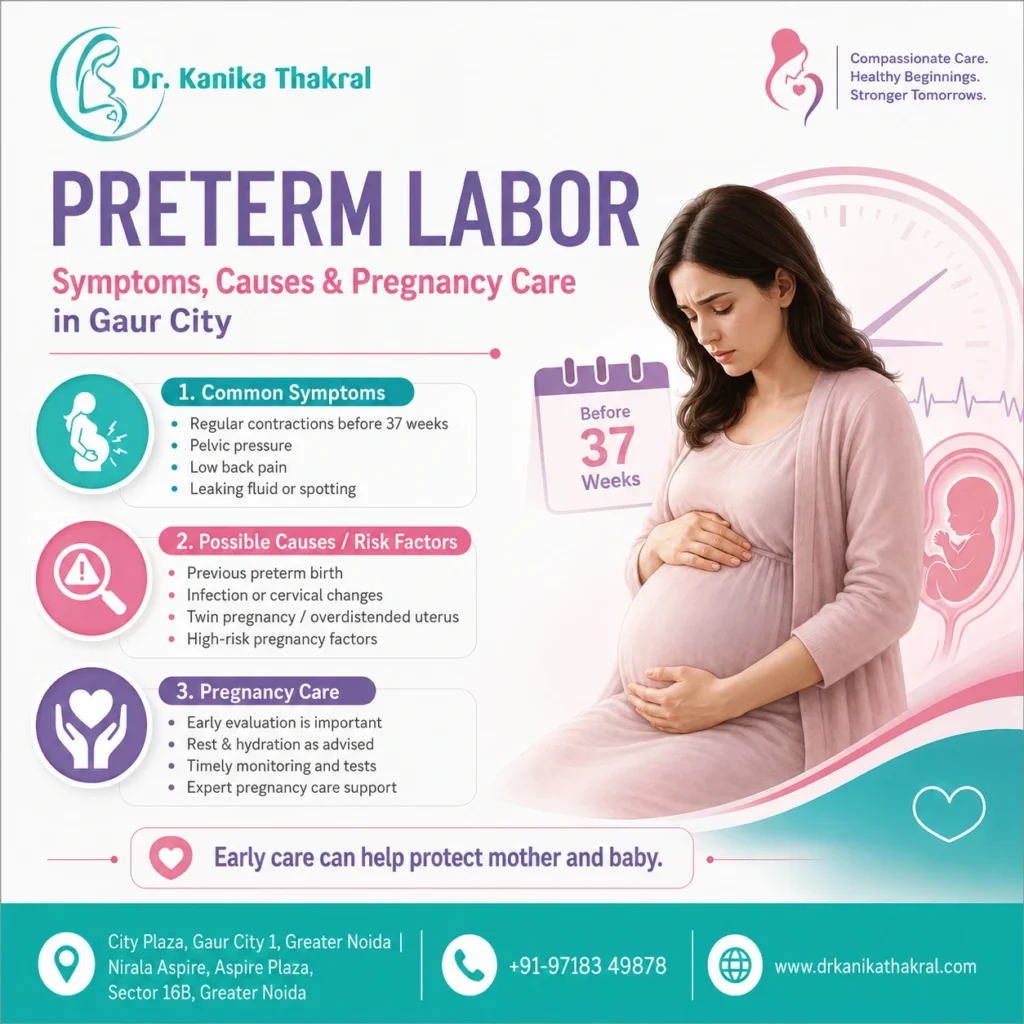
Preterm Labor in Gaur City – Symptoms, Causes & Pregnancy Care
Preterm Labor means labor-like changes that start before 37 weeks of pregnancy. It may include regular contractions, cervical changes, pressure, backache, cramps, fluid leakage, or bleeding. Since early delivery can affect baby health, these signs should never be ignored.
Many women confuse early warning signs with normal pregnancy discomfort. However, repeated tightening, pelvic pressure, watery discharge, or bleeding before term needs timely evaluation.
Dr. Kanika Thakral provides guidance for Preterm labor symptoms, Preterm labor causes, Premature delivery risk, and Pregnancy Care in Gaur City.
What Is Preterm Labor?
Preterm labor happens when the body starts preparing for delivery too early. This usually means regular contractions with changes in the cervix before 37 weeks of pregnancy.
The cervix may start thinning or opening before the baby is ready for birth. If this progresses, it can lead to premature delivery.
Early action is important because some cases can be managed better when warning signs are noticed on time.
Why Preterm Labor Matters
A full-term pregnancy gives the baby more time to grow and mature. When delivery happens too early, the baby may need extra care after birth.
Premature babies may have breathing difficulty, feeding problems, temperature problems, low birth weight, infection risk, or longer observation needs. The earlier the birth, the higher the concern may be.
Therefore, knowing symptoms and seeking timely care can make a big difference.
Preterm Labor Symptoms
Preterm labor symptoms may feel mild in the beginning. Some women may not realize that these are warning signs.
Common symptoms include:
- Regular contractions before 37 weeks
- Tightening of the abdomen
- Menstrual-like cramps
- Lower backache
- Pelvic pressure
- Increased vaginal discharge
- Watery discharge
- Blood-stained discharge
- Vaginal bleeding
- Fluid leakage
- Abdominal cramps with or without loose motions
- Feeling that the baby is pushing down
If these signs repeat or increase, consult Dr. Kanika Thakral quickly.
Contractions Before 37 Weeks
Contractions can happen during pregnancy. Some are harmless and irregular. However, regular contractions before 37 weeks need attention.
Warning signs include tightening that comes again and again, becomes stronger, or does not settle with rest and hydration.
Do not wait for severe pain. Some early contractions may feel like pressure or mild cramps. Still, they may need evaluation.
Back Pain and Pelvic Pressure
Lower backache and pelvic pressure can be common in pregnancy. However, if they are new, strong, rhythmic, or associated with cramps, discharge, or bleeding, they should be checked.
Pelvic pressure may feel like heaviness in the lower abdomen or a feeling that the baby is pushing down.
These symptoms may suggest cervical change in some cases. So, timely evaluation is important.
Vaginal Discharge Changes
A change in discharge may be one of the warning signs. Watery, mucus-like, or blood-stained discharge before term should not be ignored.
Fluid leakage may suggest membrane rupture. Bleeding may suggest cervical changes, placenta-related concerns, or other pregnancy complications.
If you notice sudden wetness, continuous leakage, or bleeding, seek guidance immediately.
Preterm Labor Causes
Preterm labor causes can be different for every woman. Sometimes, the exact cause is not found. However, certain factors can increase risk.
Possible causes or risk factors include:
- Previous preterm birth
- Twin or multiple pregnancy
- Short cervix
- Cervical weakness
- Urinary infection
- Vaginal infection
- Bleeding during pregnancy
- High blood pressure
- Diabetes in pregnancy
- Placenta-related concerns
- Excess amniotic fluid
- Uterine abnormalities
- Smoking or substance use
- Poor nutrition
- High stress
- Low body weight
- Closely spaced pregnancies
Having a risk factor does not mean preterm birth will definitely happen. It only means closer monitoring may be needed.
Premature Delivery Risk
Premature delivery risk depends on pregnancy weeks, symptoms, cervical changes, previous pregnancy history, infection status, baby growth, and overall maternal health.
Some women only have false contractions. Others may have real cervical changes. That is why proper evaluation is needed.
If risk is high, your doctor may suggest monitoring, medicines, rest, infection treatment, steroid injections for baby lung maturity in selected cases, or other steps depending on pregnancy stage.
Who Is More at Risk?
Some women may need extra care because their risk is higher. Risk may increase if there was a previous preterm birth or if the current pregnancy is twins.
Other risk factors include short cervix, repeated bleeding, infection, high blood pressure, diabetes, or certain uterine conditions.
If you already know you are high risk, do not skip checkups. Regular follow-up helps detect warning signs early.
Infection and Preterm Labor
Infections can sometimes trigger early contractions. Urinary infections, vaginal infections, or other infections may increase irritation and inflammation.
Symptoms may include burning urination, fever, discharge, smell, itching, pelvic pain, or lower abdominal discomfort.
Do not self-treat infection during pregnancy. The right test and safe medicine plan are important.
Short Cervix and Preterm Birth
The cervix supports pregnancy by staying closed until the right time. If the cervix becomes short too early, preterm birth risk may increase.
Cervical length can be checked by ultrasound when advised. Women with previous preterm birth, twin pregnancy, or risk factors may need closer cervical monitoring.
If short cervix is found, treatment depends on pregnancy weeks and individual risk.
Twin Pregnancy and Preterm Labor
Twin pregnancy has a higher chance of early delivery. Since the uterus stretches more, contractions may start earlier in some women.
Twin pregnancy needs regular scan follow-up, blood pressure monitoring, anemia care, sugar testing, and delivery planning.
If you are carrying twins and notice cramps, pressure, watery discharge, or contractions, seek care quickly.
Preterm Labor Diagnosis
Diagnosis depends on symptoms, examination, and pregnancy stage. Dr. Kanika Thakral may check whether contractions are regular and whether the cervix is changing.
Evaluation may include:
- History of symptoms
- Contraction monitoring
- Blood pressure check
- Baby heartbeat check
- Pelvic examination if needed
- Cervical length ultrasound
- Urine test
- Infection testing if needed
- Fluid leakage assessment
- Fetal growth scan
The goal is to know whether symptoms are false alarms or real preterm labor.
Difference Between False Labor and Preterm Labor
False contractions may be irregular and may settle with rest, hydration, or position change. They usually do not cause cervical changes.
True early labor tends to become regular, stronger, or more frequent. It may be linked with cervical opening, back pain, pelvic pressure, discharge change, or fluid leakage.
Since it is hard to know at home, repeated symptoms should be checked.
Treatment and Care
Care depends on pregnancy weeks, severity, symptoms, cervical changes, and baby condition. Treatment is always personalized.
Possible care steps may include:
- Observation and monitoring
- Hydration if needed
- Rest advice
- Infection treatment
- Medicines to reduce contractions in selected cases
- Steroid injections for baby lung maturity when suitable
- Magnesium support in selected early cases
- Baby heartbeat monitoring
- Delivery planning if labor cannot be stopped
The aim is to improve safety for mother and baby.
Pregnancy Care in Gaur City
Pregnancy Care in Gaur City includes regular checkups, scan follow-up, blood pressure monitoring, sugar testing, anemia care, and warning sign guidance.
For women with preterm labor risk, care may include closer visits and more detailed monitoring.
Dr. Kanika Thakral provides guidance for pregnancy symptoms, premature delivery risk, and safe pregnancy planning.
Irregular Periods Treatment Before Pregnancy
Irregular Periods Treatment is not the same as preterm labor care. However, menstrual history is important before and during pregnancy.
Women with irregular periods may have difficulty confirming pregnancy dates. Correct dating matters because preterm labor is based on pregnancy weeks.
If periods were irregular before pregnancy, early ultrasound dating can help track pregnancy more accurately.
Can Normal Delivery Happen After Preterm Labor?
Normal Delivery may happen in some cases if labor progresses and vaginal birth is safe. However, the delivery plan depends on pregnancy weeks, baby position, mother’s health, fetal condition, and reason for early labor.
In some cases, delivery may need to be delayed with treatment. In others, delivery may be safer if there are serious concerns.
The focus should always be safety, not only the mode of delivery.
How to Reduce Risk
Preterm birth cannot always be prevented. Still, some steps can reduce avoidable risks.
Helpful steps include:
- Attend regular pregnancy visits.
- Treat infections early.
- Monitor blood pressure.
- Control blood sugar.
- Avoid smoking and alcohol.
- Eat a balanced diet.
- Stay hydrated.
- Avoid heavy strain if advised.
- Report bleeding or fluid leakage.
- Follow scan schedule.
- Do not miss medicines if prescribed.
- Discuss previous preterm birth history.
Small actions can support better pregnancy outcomes.
Warning Signs That Need Urgent Care
Seek urgent guidance if you notice:
- Regular contractions before 37 weeks
- Fluid leakage
- Vaginal bleeding
- Strong pelvic pressure
- Severe backache
- Menstrual-like cramps
- Reduced baby movements
- Fever
- Severe abdominal pain
- Sudden swelling or headache
Do not wait for symptoms to become severe. Early care matters.
When Should You Consult Dr. Kanika Thakral?
Consult Dr. Kanika Thakral if you are pregnant and notice contractions, cramps, pelvic pressure, bleeding, discharge change, or fluid leakage before 37 weeks.
You should also consult early if you have:
- Previous preterm birth
- Twin pregnancy
- Short cervix
- Recurrent pregnancy loss
- Infection symptoms
- High blood pressure
- Diabetes in pregnancy
- Bleeding in pregnancy
- Severe stress or weakness
- Confusing pregnancy symptoms
- Need for delivery planning
Timely evaluation gives clarity and reduces unnecessary fear.
Why Choose Dr. Kanika Thakral?
Dr. Kanika Thakral provides caring guidance for Preterm labor symptoms, Preterm labor causes, Premature delivery risk, and pregnancy warning signs.
Women can consult Dr. Kanika Thakral for Pregnancy Care in Gaur City, early contraction evaluation, pregnancy monitoring, and delivery planning.
If you are looking for a Gynecologist in Gaur City, Dr. Kanika Thakral can guide you with privacy, comfort, and clear communication.
Final Thoughts
Preterm Labor is a serious pregnancy concern that needs timely attention. Warning signs may include regular contractions, pelvic pressure, backache, cramps, discharge change, bleeding, or fluid leakage before 37 weeks.
Not every symptom means early delivery will happen. However, checking early is safer than waiting.
For Preterm labor symptoms, Preterm labor causes, Premature delivery risk, Pregnancy Care in Gaur City, and delivery planning, consult Dr. Kanika Thakral.
FAQs
1. What is Preterm Labor?
Preterm Labor means labor-like changes that start before 37 weeks of pregnancy and may include contractions with cervical changes.
2. What are common preterm labor symptoms?
Common symptoms include regular contractions, cramps, backache, pelvic pressure, discharge change, bleeding, or fluid leakage.
3. What causes preterm labor?
Common causes or risk factors include previous preterm birth, twin pregnancy, short cervix, infection, bleeding, high BP, diabetes, or placenta-related concerns.
4. Can preterm labor be stopped?
In some cases, treatment may help delay delivery. It depends on pregnancy weeks, cervical changes, symptoms, and mother-baby condition.
5. Is premature delivery risky?
Yes, premature delivery can increase baby health risks, especially if birth happens very early.
