
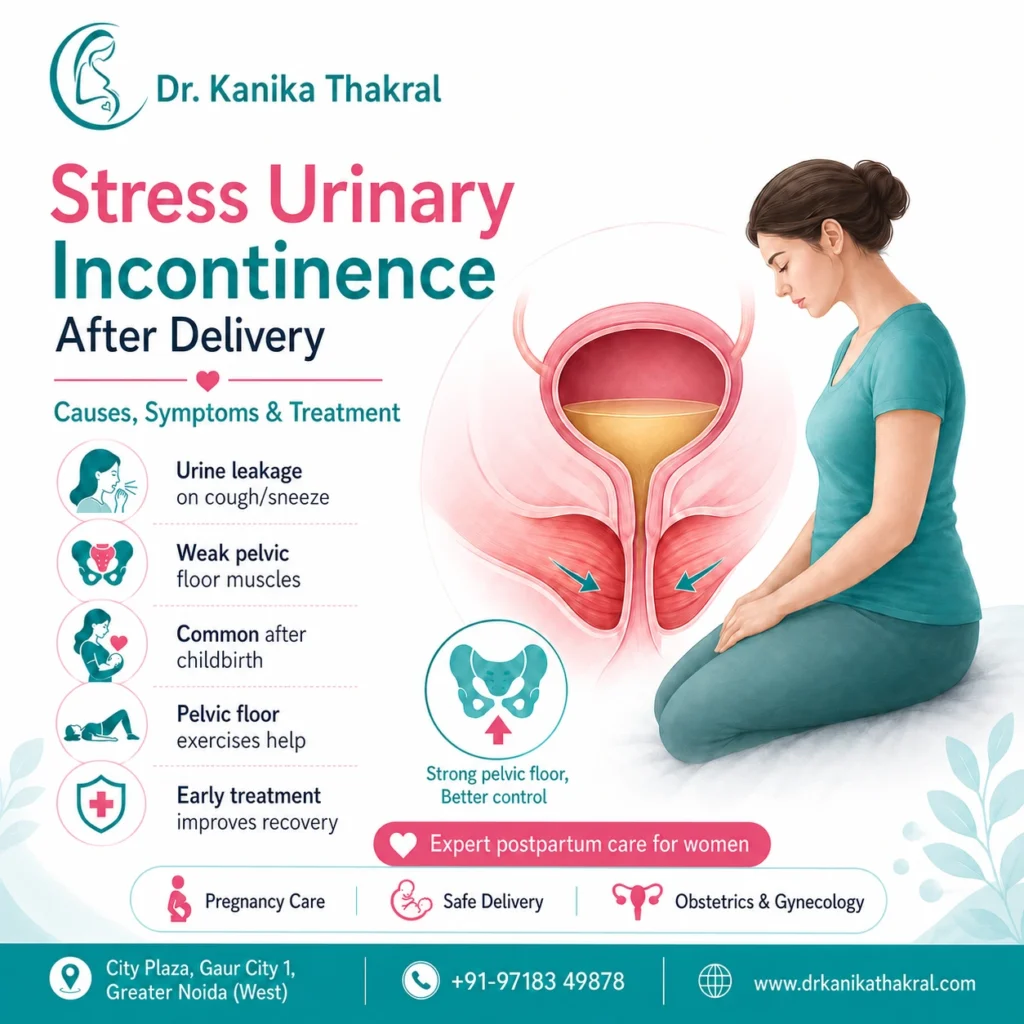
Stress Urinary Incontinence After Delivery: Causes and Treatment
Motherhood brings many changes. Some changes are beautiful. Some feel uncomfortable. One common problem after delivery is urine leakage. It may happen while coughing, sneezing, laughing, lifting the baby, or walking fast. This problem is called Stress Urinary Incontinence.
Many women feel shy about it. Some ignore it for months. However, urine leakage after delivery is a medical concern. It is also treatable. With the right care, most women can improve their bladder control.
At Dr. Kanika Thakral, women get caring support for pregnancy, delivery, and postnatal recovery. The clinic focuses on complete Obstetrics & Gynecology care. So, if you are facing urine leakage after childbirth, you do not need to suffer silently.
What Is Stress Urinary Incontinence?
Stress Urinary Incontinence means urine leakage due to pressure on the bladder. Here, the word “stress” means physical pressure. It does not mean mental stress.
Leakage can happen during simple activities. For example, you may leak urine while coughing, sneezing, laughing, or exercising. Some women also leak urine while lifting their baby.
The leakage may be mild. It may happen only a few drops. In some cases, it may be more frequent. If it affects your routine, you should consult a gynecologist.
Why Does Stress Urinary Incontinence Happen After Delivery?
Pregnancy puts pressure on the bladder. As the baby grows, the uterus becomes heavier. This pressure affects the pelvic floor muscles. These muscles support the bladder, uterus, and bowel.
During delivery, these muscles stretch a lot. Sometimes, they become weak. When the pelvic floor becomes weak, the bladder does not get proper support. So, urine may leak when pressure increases.
This is why many women notice leakage after childbirth. It can happen after normal delivery. It can also happen after C-section because pregnancy itself affects the pelvic floor.
Common Causes of Stress Urinary Incontinence After Delivery
1. Weak Pelvic Floor Muscles
Pelvic floor muscles control urine flow. They also support the bladder. Pregnancy and childbirth can weaken these muscles.
When these muscles are weak, they cannot hold urine properly. As a result, leakage may happen during coughing or sneezing.
2. Normal Delivery Pressure
During normal delivery, the pelvic floor stretches deeply. Long labor or difficult pushing may increase the risk. Assisted delivery may also put more pressure on the pelvic area.
This does not mean normal delivery is unsafe. With proper care and guidance, Safe Delivery is possible. However, post-delivery recovery also needs attention.
3. Multiple Pregnancies
Women who have had more than one pregnancy may have more pelvic weakness. Repeated stretching can affect muscle strength. So, leakage may become more common.
4. High Baby Weight
A larger baby can put more pressure on the pelvic floor. This pressure can continue during pregnancy and delivery. So, bladder control may become weak after childbirth.
5. Constipation After Delivery
Constipation is common after delivery. Many women strain during bowel movements. This puts extra pressure on the pelvic floor. It can make urine leakage worse.
6. Weight Gain
Extra body weight increases pressure on the bladder. This may worsen leakage. A healthy weight plan can help, but it should be safe and gradual.
7. Frequent Coughing
A chronic cough can trigger urine leakage. Every cough puts pressure on the bladder. So, treating cough or allergy is also important.
Symptoms You Should Not Ignore
The main symptom is urine leakage during physical pressure. It may happen during daily tasks.
You may notice:
- Leakage while coughing or sneezing
- Leakage while laughing
- Urine leakage while lifting your baby
- Leakage during exercise
- Need to wear pads daily
- Fear of going outside
- Reduced confidence
- Pelvic heaviness
- Weak bladder control
Some women feel embarrassed. But this problem is common. More importantly, it can be treated.
When Should You See a Gynecologist?
Mild leakage may improve in the first few weeks. But you should not ignore frequent leakage. You should consult a doctor if symptoms continue after six weeks.
You should also seek help if leakage affects your confidence. If you feel pain, burning urine, fever, or pelvic heaviness, visit a gynecologist soon.
A proper checkup at a trusted Women Clinic in Gaur City can help find the cause. Early treatment can prevent the problem from getting worse.
How Is Stress Urinary Incontinence Diagnosed?
Diagnosis usually starts with a simple discussion. Your doctor may ask about your delivery, symptoms, and daily routine. You may also be asked about water intake, constipation, cough, and exercise.
A pelvic examination may be done. This helps check pelvic floor strength. Sometimes, a urine test may be advised. This helps rule out infection.
In most cases, diagnosis is simple. The aim is to understand the severity. After that, your doctor can suggest the best treatment plan.
Treatment for Stress Urinary Incontinence After Delivery
The treatment depends on your symptoms. It also depends on your delivery history and pelvic floor strength. Most women do not need surgery. Simple treatment can help a lot.
1. Pelvic Floor Exercises
Pelvic floor exercises are very useful. They are also called Kegel exercises. These exercises strengthen the muscles that control urine.
To do them, gently tighten the muscles used to stop urine flow. Hold for a few seconds. Then relax fully. Repeat this several times.
However, correct technique is important. Many women do these exercises the wrong way. So, it is better to learn them from a doctor or pelvic floor expert.
2. Bladder Training
Bladder training helps improve control. It teaches the bladder to hold urine for a better time. Your doctor may suggest fixed bathroom timings.
This method works well when leakage is mixed with urgency. It also helps improve daily confidence.
3. Lifestyle Changes
Small lifestyle changes can reduce leakage. They also support healing after delivery.
Helpful steps include:
- Avoid constipation
- Drink enough water
- Reduce excess tea or coffee
- Avoid heavy lifting too early
- Treat frequent cough
- Maintain healthy weight
- Start exercise slowly
- Do pelvic floor exercises daily
These steps are simple. But they can make a big difference with time.
4. Pelvic Floor Physiotherapy
Some women need guided therapy. Pelvic floor physiotherapy helps train the right muscles. It also improves posture, breathing, and muscle control.
This is helpful if you cannot feel the pelvic floor muscles. It is also useful when leakage does not improve with basic exercises.
5. Post-Delivery Care
Postpartum care is very important. Many women focus only on the baby after delivery. But the mother’s body also needs care.
Good Pregnancy Care should continue after childbirth. A postnatal checkup can help detect bladder issues, weakness, pain, and hormonal changes.
At Dr. Kanika Thakral, women receive complete support for recovery after delivery. The care includes pelvic health, menstrual health, breastfeeding concerns, and general women’s health.
6. Medical Support
In some cases, your doctor may suggest extra support. This depends on your symptoms and examination. Some women may need devices that support the bladder area.
These options are not needed for everyone. Your gynecologist will guide you based on your condition.
7. Surgery
Surgery is not the first treatment after delivery. It is usually considered only in severe cases. It may be advised when other treatments do not work.
Your doctor will also ask about future pregnancy plans before suggesting surgery. So, never decide on your own. Always take expert advice.
Can Stress Urinary Incontinence Be Prevented?
It may not be fully preventable. But the risk can be reduced.
Pelvic floor exercises during pregnancy can help. Managing constipation is also important. Healthy weight gain during pregnancy supports better recovery.
Regular antenatal visits also matter. If you are planning delivery, choose proper medical care. Safe monitoring can help reduce avoidable complications.
Dr. Kanika Thakral provides pregnancy and post-delivery care for women who need trusted support. If you are searching for the Best Gynecologist in Gaur City, timely consultation can help you manage pregnancy and recovery better.
Home Care Tips for New Mothers
You can follow some simple tips at home.
Do not stop drinking water because of leakage. Less water can irritate the bladder. Instead, drink enough water through the day.
Avoid constipation. Eat fruits, vegetables, and fiber-rich foods. Walk gently if your doctor allows it.
Do not lift heavy objects too soon. Your body needs time to heal. Also, avoid high-impact workouts in the early postpartum phase.
Most importantly, do pelvic floor exercises daily. But learn the correct method first.
Stress Urinary Incontinence and Menstrual Health
After delivery, periods may take time to return. Some women also face heavy bleeding, delayed periods, or irregular cycles. Hormonal changes are common during this phase.
If bladder leakage happens with period changes, pain, or weakness, consult a gynecologist. A complete checkup can help find the real cause.
Dr. Kanika Thakral also provides care for Irregular Periods Treatment and other women’s health concerns. This helps women get complete care in one place.
Myths About Stress Urinary Incontinence
Myth 1: It happens to every mother, so treatment is not needed.
This is not true. It is common, but treatment is available.
Myth 2: Only older women face urine leakage.
This is wrong. Young mothers can also face leakage after delivery.
Myth 3: Pads are the only solution.
Pads only manage leakage. They do not treat the cause.
Myth 4: You should drink less water.
This can make bladder irritation worse. Balanced hydration is better.
Myth 5: Surgery is always needed.
Most women improve with exercises, lifestyle changes, and therapy.
Why Choose Dr. Kanika Thakral?
Dr. Kanika Thakral offers women-focused care in Gaur City. The approach is simple, respectful, and practical. Women can discuss post-delivery concerns without hesitation.
You can consult for:
- Urine leakage after delivery
- Pelvic floor weakness
- Pregnancy care
- Delivery planning
- Period problems
- Postpartum recovery
- Hormonal concerns
- General gynecology checkups
If you need a trusted Women Clinic in Gaur City, Dr. Kanika Thakral provides complete care for women at different stages of life.
Final Words
Stress Urinary Incontinence after delivery can feel stressful. But it is not something you have to accept forever. Early care can help you recover faster.
Pelvic floor exercises, lifestyle changes, bladder training, and medical support can improve symptoms. The right treatment depends on your condition.
At Dr. Kanika Thakral, women get complete care for Obstetrics & Gynecology, Pregnancy Care, Safe Delivery, postpartum recovery, and Irregular Periods Treatment.
If urine leakage is affecting your comfort, confidence, or daily routine, book a consultation with Dr. Kanika Thakral. A simple checkup can help you take the right step toward better bladder health.
FAQs
1. Is urine leakage normal after delivery?
Yes, mild leakage can happen after delivery. But if it continues, you should consult a gynecologist.
2. What causes stress urinary incontinence after delivery?
It usually happens due to weak pelvic floor muscles. Pregnancy and childbirth can stretch these muscles.
3. Can pelvic floor exercises help?
Yes, pelvic floor exercises can help many women. But the correct technique is very important.
4. How long does urine leakage last after delivery?
Some women improve within weeks. Others may need treatment for a few months.
5. Can C-section also cause urine leakage?
Yes. Pregnancy itself can weaken the pelvic floor. So, leakage can happen after C-section too.
